Upright Scrubber-Dryer · Operator-pushed · PUDU Robotics Available to order

SH1 cordless upright scrubber for the parts a robot cannot reach.

The PUDU SH1 is not a robot: it is a cordless upright scrubber-dryer an operator pushes. We carry it because every robotic deployment leaves detail work, and a 44 cm scrubber that dries behind itself beats a mop and bucket for the corners, the tight rooms and the spill that will not wait.

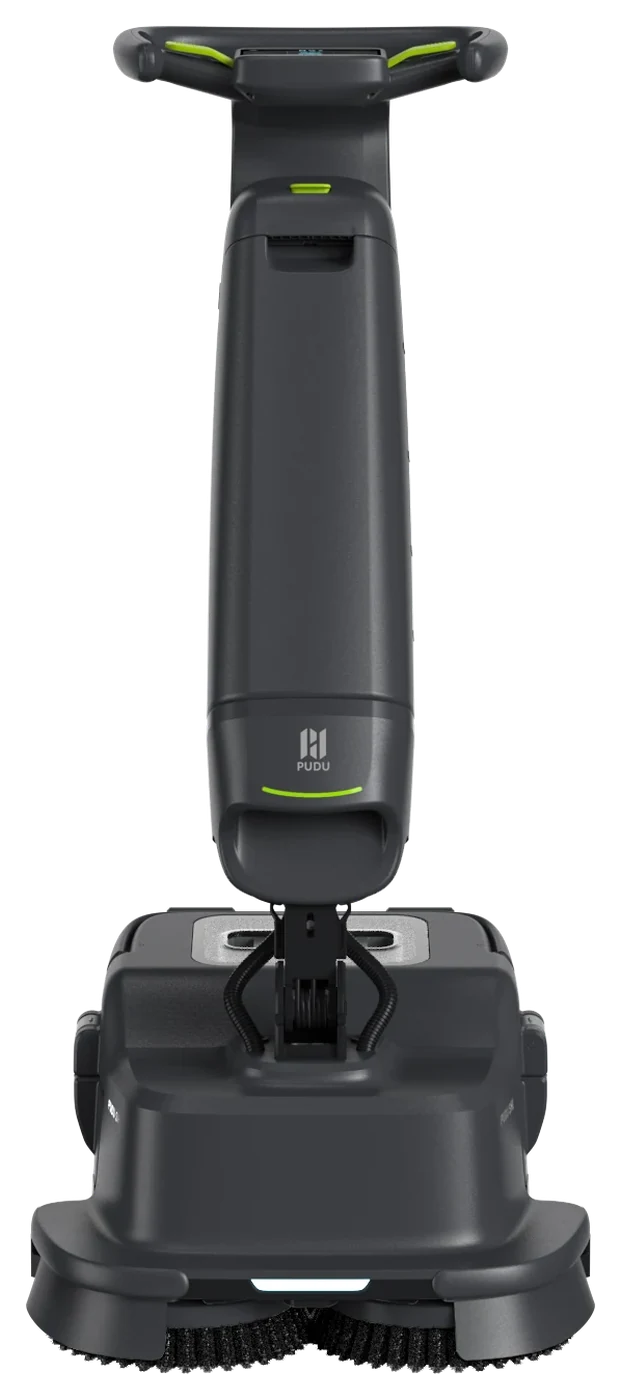
PUDU SH1 cordless upright scrubber-dryer, front view
1,600m²/h
Cleaning rate
44cm
Cleaning path
20kPa
Suction
90min
Max runtime
Every angle

The SH1 from every side.

Front, both sides, and the swappable battery that keeps it running between charges.

PUDU SH1 upright scrubber-dryer, front view
What it does

The honest gap in every robotic deployment.

A cleaning robot handles the open floor extremely well and the awkward parts not at all. Behind the toilet door, under a fixed bench, the two square metres between the fridge and the wall, the spill in the middle of service: these are the jobs that stay manual after the robot arrives, and pretending otherwise sets a deployment up to disappoint.

The PUDU SH1 is what we put against that gap. It is a cordless upright scrubber-dryer, pushed by a person, not autonomous and not pretending to be. What it replaces is the mop and bucket, which is a much lower bar than replacing a robot.

The mechanism is the reason it is worth having. A brush turning at 350 rpm under 27 kg of downward pressure, followed by 20 kPa of suction, lifts dirt off the floor and takes the water straight back up. A mop redistributes dirty water and leaves the floor wet; this does not.

Practically it is a 44 cm path covering 1,100 to 1,600 m²/h, with 4.3 L tanks each way and a swappable battery so a second pack keeps it going. Cordless matters more than it sounds: no lead means no trip hazard and no hunting for a power point in a public space.

Capabilities

What you get, at a glance.

Eight things a cordless upright scrubber does that a mop and bucket cannot.

Dries behind itself

20 kPa of suction takes the water back up, so the floor is walkable straight away.

27 kg brush pressure

Downward force at 350 rpm lifts dirt out of the floor instead of moving it around.

Swappable battery

A second pack keeps it working while the first charges, with no cable.

Cordless

No lead across a public floor, and no hunting for a power point in a venue.

44 cm path

Narrow enough for tight rooms and around fixtures where a large machine cannot go.

On-board display

Mode, battery and tank status on a screen rather than guesswork.

Separate tanks

4.3 L clean and 4.3 L recovery, so dirty water never goes back on the floor.

Three power modes

Eco, standard and heavy-duty, trading runtime against how hard the floor needs working.

In detail

Why we carry a machine that is not a robot.

Three reasons a manual scrubber earns a place alongside an autonomous fleet.

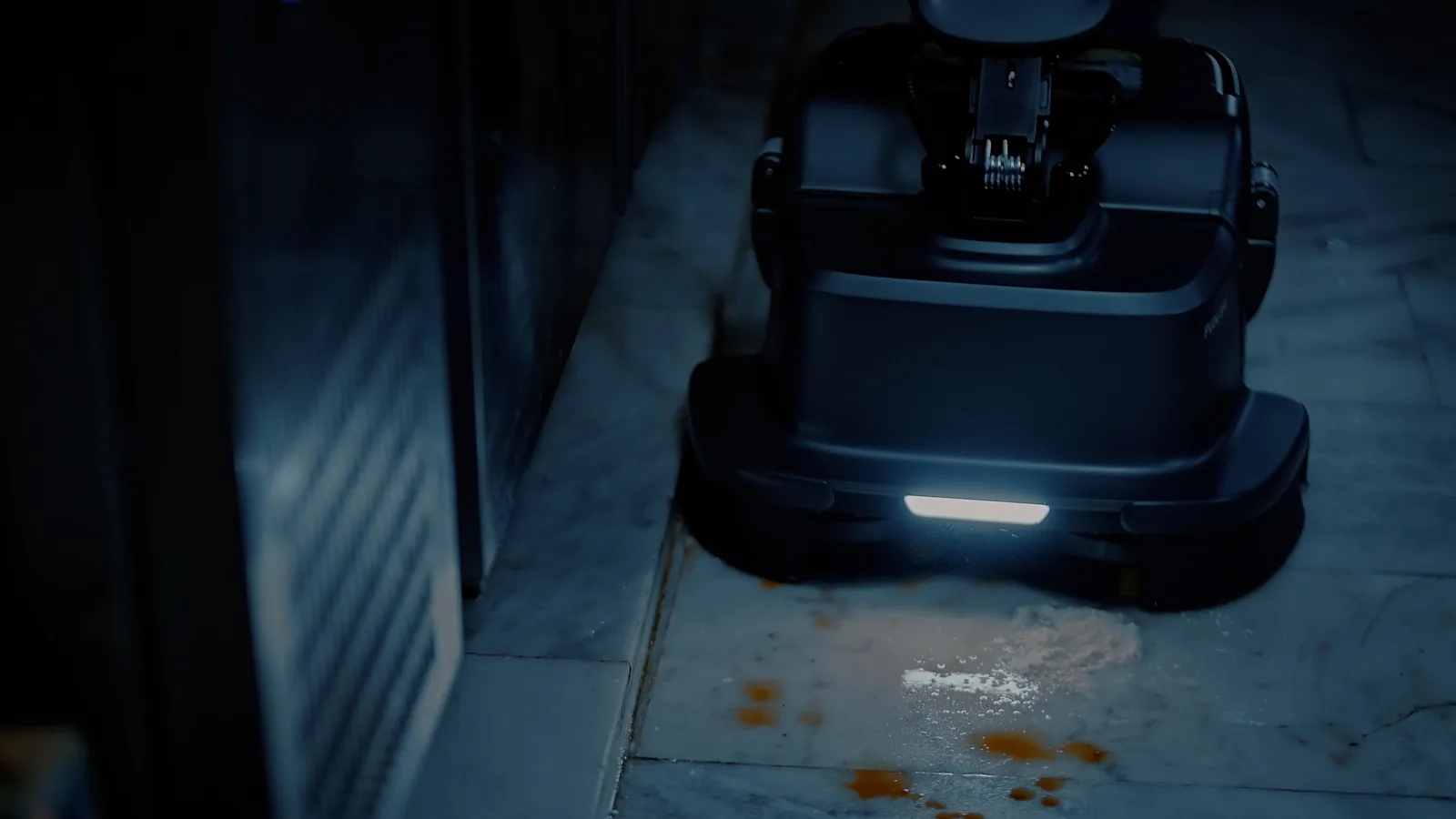
PUDU SH1 scrubbing a floor in a dimly lit venue
20kPa

The floor is dry when you finish

A mop leaves water on the floor, which means either a wet-floor sign for twenty minutes or a slip risk you have chosen to accept. Twenty kilopascals of suction behind the brush takes the water back up, so the area reopens immediately. In hospitality and retail that is the entire argument.

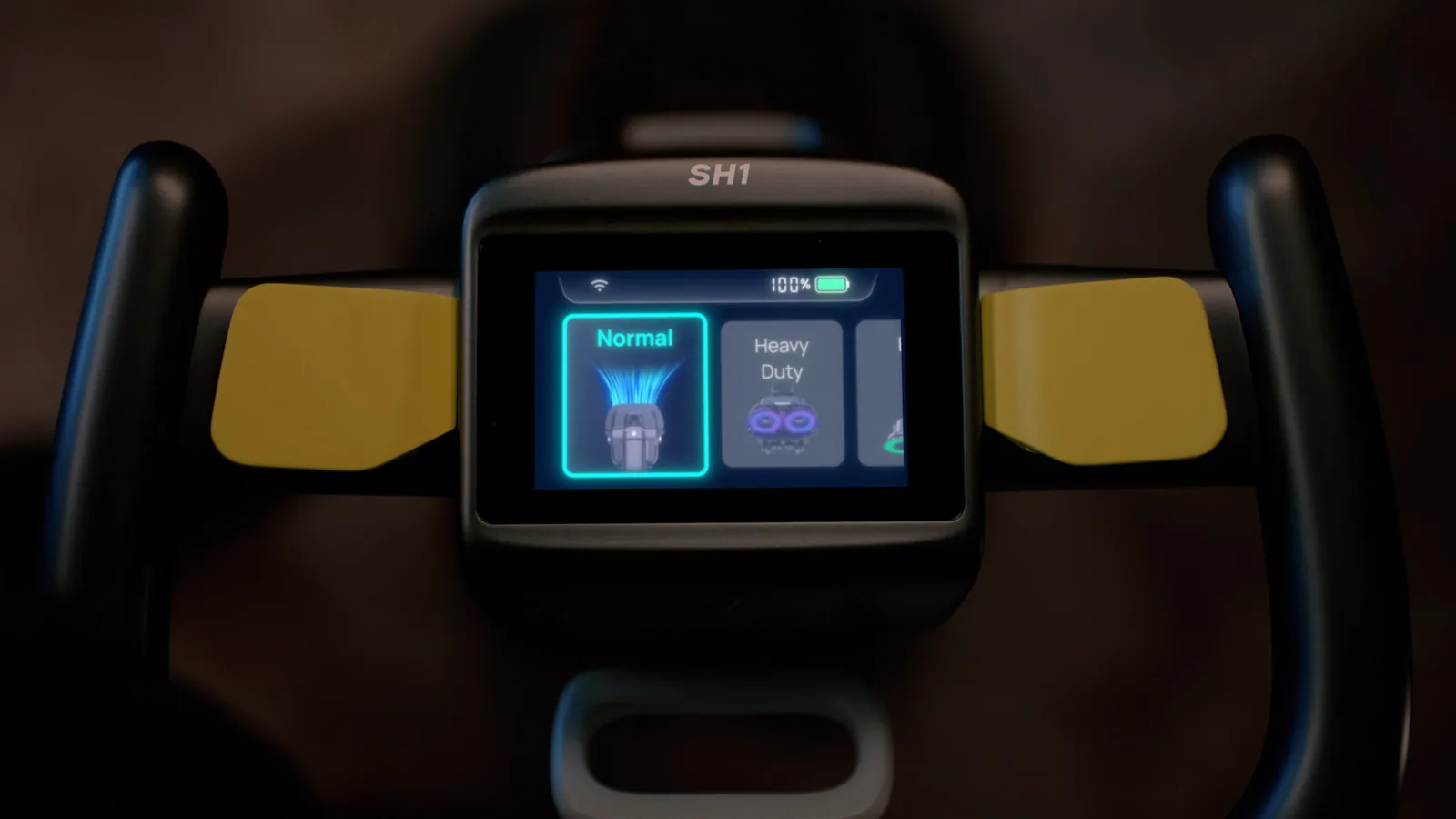
Close view of the PUDU SH1 control screen showing cleaning modes
3modes

Runtime you can actually plan around

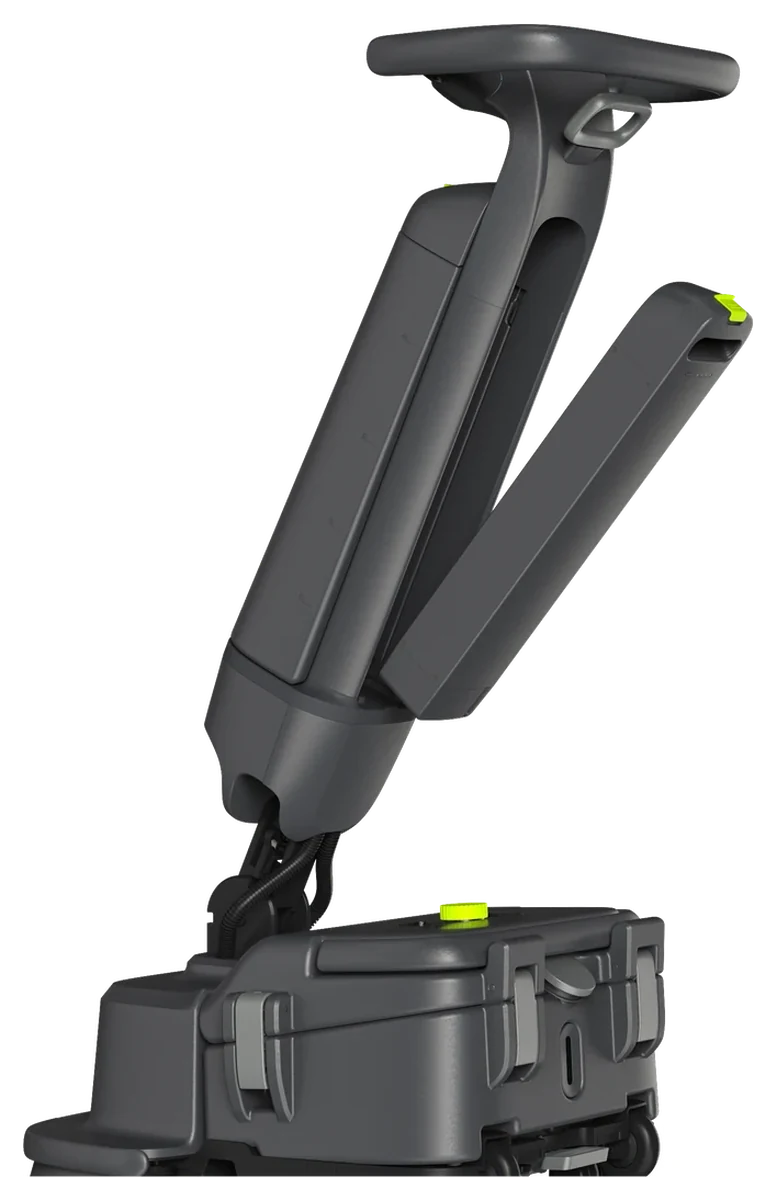
Ninety minutes in eco, seventy in standard, fifty in heavy-duty, and a full charge in about two and a half hours. Because the battery swaps out, a second pack turns that into continuous availability rather than a machine that is flat when you need it most.

PUDU SH1 with its battery pack removed for swapping
44cm

Fits where the robot does not

A 44 cm path gets into amenities, storerooms, behind counters and around fixed furniture. Those areas are small individually and substantial in total, and they are exactly what stays manual after an autonomous machine takes the open floor.

Best for

Where the SH1 earns its keep.

Detail and edge work alongside a robot fleet, and small hard-floor sites where a full robot is not yet justified.

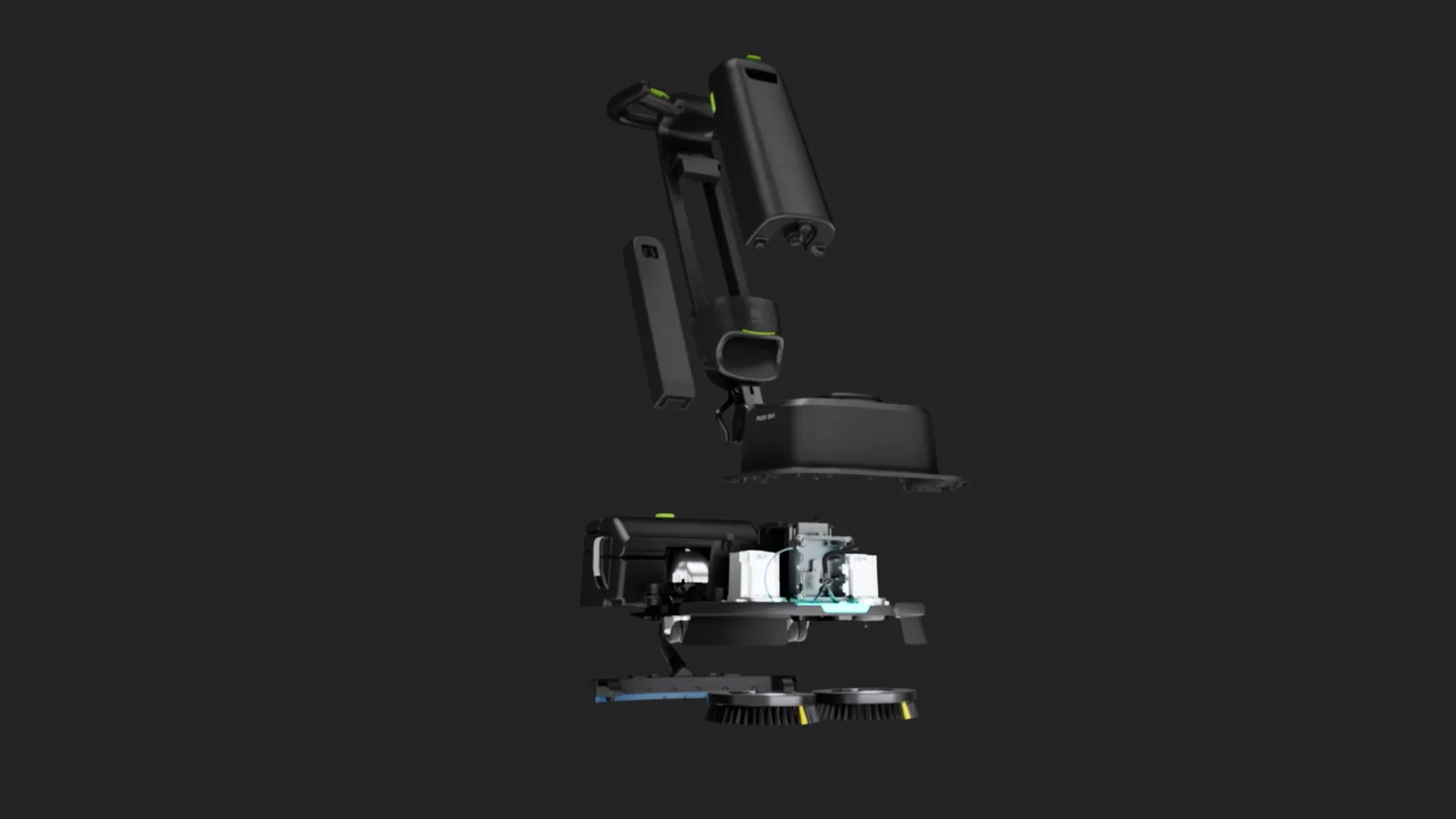
PUDU SH1 upright scrubber-dryer shown with its components
The complement to an autonomous fleet: the machine for the parts a robot leaves behind.

Cafés & quick service

Kitchen approaches and front-of-house spills that need dealing with during service.

Retail & specialty

Behind counters, in fitting rooms and around fixed displays where a robot cannot reach.

Amenities & washrooms

Small tiled rooms that stay manual on every robotic deployment.

Hotels & venues

Back-of-house, service corridors and rapid turnaround between functions.

Workshops & service bays

Oil and grit on sealed floors in areas too congested for an autonomous machine.

Alongside a robot fleet

The detail machine that makes a robotic deployment complete rather than partial.

How it works

There is no mapping. Someone pushes it.

We are including this section for consistency, but an upright scrubber is genuinely simple: charge it, fill it, push it, empty it.

Step 01

Charge

About two and a half hours for a full pack, or swap a second battery in and keep going.

Step 02

Fill

4.3 L of clean water and detergent, which is one tank fill for a typical detail round.

Step 03

Push

Pick a mode by how hard the floor needs working, then walk it. It scrubs and dries in one pass.

Step 04

Empty

Tip the 4.3 L recovery tank and rinse the brush. That is the whole maintenance routine.

Specifications

Every number, on the record.

Manufacturer figures for the SH1. This is a manual machine, so there is no coverage-per-shift figure: how much it does depends entirely on the operator and the floor.

Performance
Category
Cordless upright scrubber-dryer operator-pushed, not autonomous
Cleaning rate
About 1,100–1,600 m²/h
Cleaning path
440 mm
Suction
20 kPa
Brush speed
350 rpm
Brush pressure
27 kg downward
Capacities & power
Clean water tank
4.3 L
Recovery tank
4.3 L
Runtime, eco
About 90 minutes
Runtime, standard
About 70 minutes
Runtime, heavy-duty
About 50 minutes
Charging time
About 2.5 hours
Battery
Swappable pack
Operation
Control
On-board display with mode, battery and tank status
Power modes
Eco, standard and heavy-duty
Autonomy
None. This is a manual walk-behind machine
Suitability
Floor types
Sealed hard floors: tile, vinyl, sealed concrete, polished stone
Typical use
Edge and detail work alongside a robot fleet, or small hard-floor sites
Typical sites
Café, retail, amenities, hotel back-of-house, workshop
Australian deployment

A robot fleet is better with an honest manual machine in it.

We would rather tell you what a cleaning robot does not do. It does not clean behind a toilet door, under a fixed bench, or in the metre of floor between a fridge and a wall, and on most sites those areas add up to a real amount of work that stays on someone's roster after the robot arrives.

The SH1 is the answer to that, and it is deliberately a modest one. It is not autonomous and we will not describe it as smart cleaning. It is a cordless upright scrubber that does a much better job than a mop, in the places an autonomous machine will never reach.

The drying is the part that matters commercially. A mop leaves a wet floor, which in a WA café or shop means a hazard sign and a closed area during trade. 20 kPa of suction means the floor is walkable as the operator finishes, so the space stays open.

It also works as a starting point. If your site is too small to justify an ET1 on the numbers, an SH1 improves the cleaning immediately at a fraction of the commitment, and the conversation about automation can wait until the floor area or the labour hours justify it.

Why Perth Robots

Honest credibility, not just claims.

Engineering-led.

Built by someone who has engineered advanced systems and operated them in demanding environments. We know what these machines can and can't do.

WA-based service, not a reseller.

We deploy and service every unit ourselves across WA. If a robot's down at 2am on a mine site, that's on us, in the same time zone.

Multi-OEM, honest advice.

We recommend the right robot for your site, not the only one we carry.

Low-risk by design.

RaaS is a flat monthly subscription, not a capital gamble. The risk sits with us, and you run the robot as often as you need.

FAQ

Common buyer questions.

Is the SH1 a robot?
No, and we would rather be direct about that. It is a cordless upright scrubber-dryer that an operator pushes. There is no mapping, no scheduling and no autonomy. We carry it because robotic deployments leave detail work, and a proper scrubber beats a mop for that work.
Why would we buy this instead of a robot?
Usually you would not: you would buy it as well. The robot takes the open floor and the SH1 takes the corners, amenities and behind-counter areas it cannot reach. The exception is a site too small to justify a robot on the numbers, where an SH1 improves the cleaning immediately at far lower commitment.
How is it better than a mop and bucket?
Three ways. The brush turns at 350 rpm under 27 kg of pressure, so it lifts dirt out of the floor rather than spreading it. The 20 kPa vacuum takes the water back up, so the floor is dry immediately. And the dirty water goes into a separate recovery tank instead of back onto the floor via the bucket.
How long does it run for?
About 90 minutes in eco mode, 70 in standard and 50 in heavy-duty, with a full charge taking around two and a half hours. The battery is swappable, so a second pack turns it into a machine that is always available rather than one that is flat when you need it.
How much floor will it actually do?
The manufacturer figure is roughly 1,100 to 1,600 m²/h depending on floor condition and mode, but that is a rate rather than a shift total, and on a manual machine the operator sets the pace. For detail work the useful measure is areas covered per round, which we work out with you rather than quoting a number.
Can it go where a robot cannot?
That is the point of it. A 44 cm path fits amenities, storerooms, behind counters and around fixed furniture. Those spaces are small individually but substantial in total, and they are precisely what stays manual after an autonomous machine takes the open floor.
Does it need training to use?
Very little. Fill it, pick a mode, push it, empty it. We run through it on handover along with the brush and squeegee maintenance, which is the part that determines whether it still cleans well in six months.
How do we pay for it?
Three ways, your choice. Robot as a Service is a flat monthly subscription from $50 a day covering hardware, servicing, support and software. You can also buy outright with an optional Care Plan, or take a 2 to 4 year lease, with the option to own the unit at the end of the term.
Who services it in Western Australia?
We do. Perth Robots handles supply, handover, training and ongoing service ourselves from Perth. Metro sites get same-day on-site response; regional WA gets next business day for parts.
Take the next step

Finish the floor the robot cannot reach.

Tell us what stays manual on your site after the open floor is handled. We'll come back inside one business day with an indicative quote, and an honest view on whether you need this, a robot, or both.

Call us
Related

Want the open floor automated too?

The SH1 handles detail. These handle the floor area, and the two together are what a complete deployment usually looks like.