Large Scrubber-Dryer · Sweep & scrub · PUDU Robotics Available to order

BG1 large sweeper-scrubber for warehouse and supermarket floors.

The PUDU BG1 is the large-format unit: a front sweeping module and a rear scrubbing module running together, so dry debris and wet cleaning happen in a single pass. 75 L of clean water, up to 2,000 m²/h on coverage, and a stowable ride-on seat for when a person needs to take over.

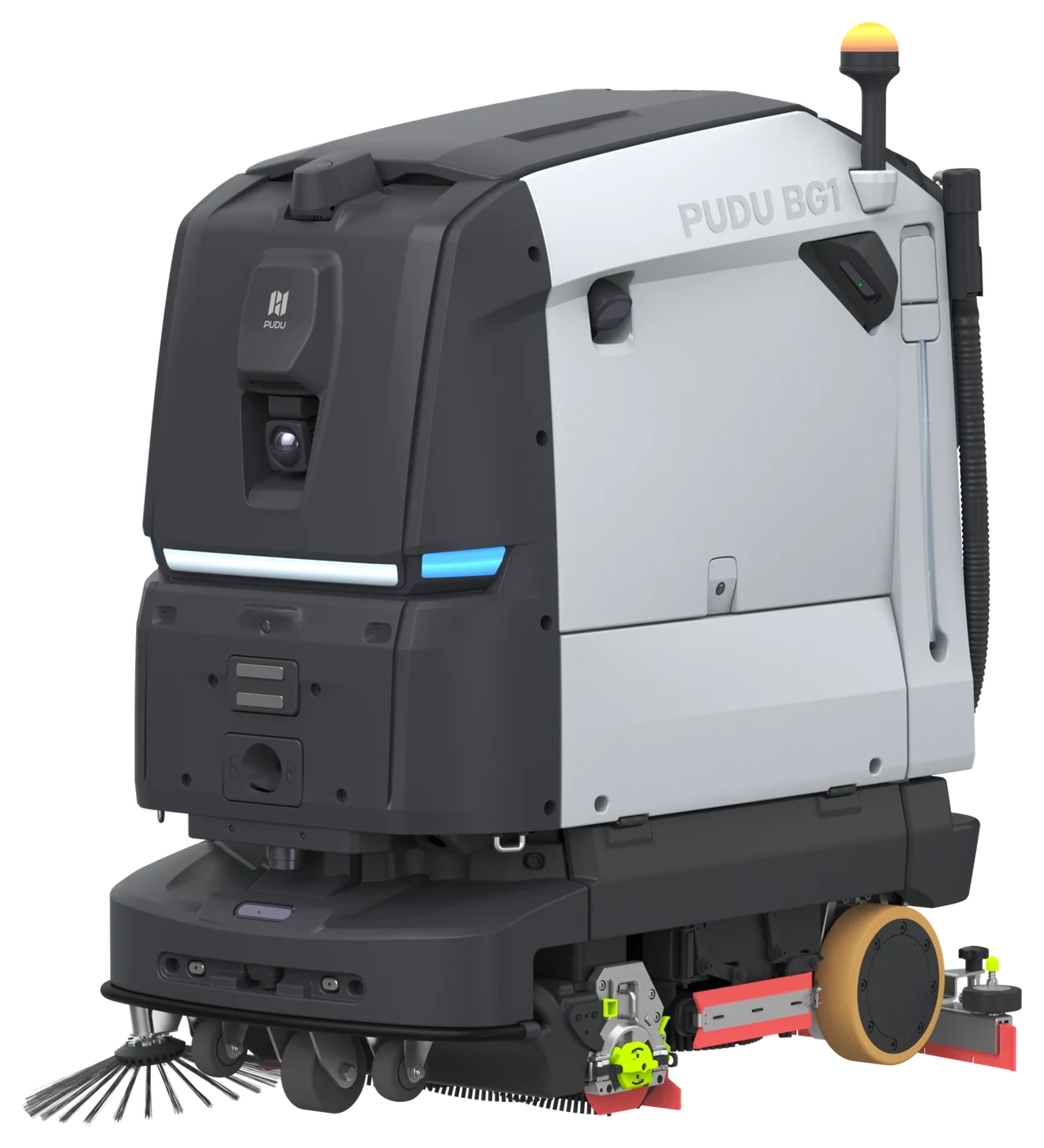
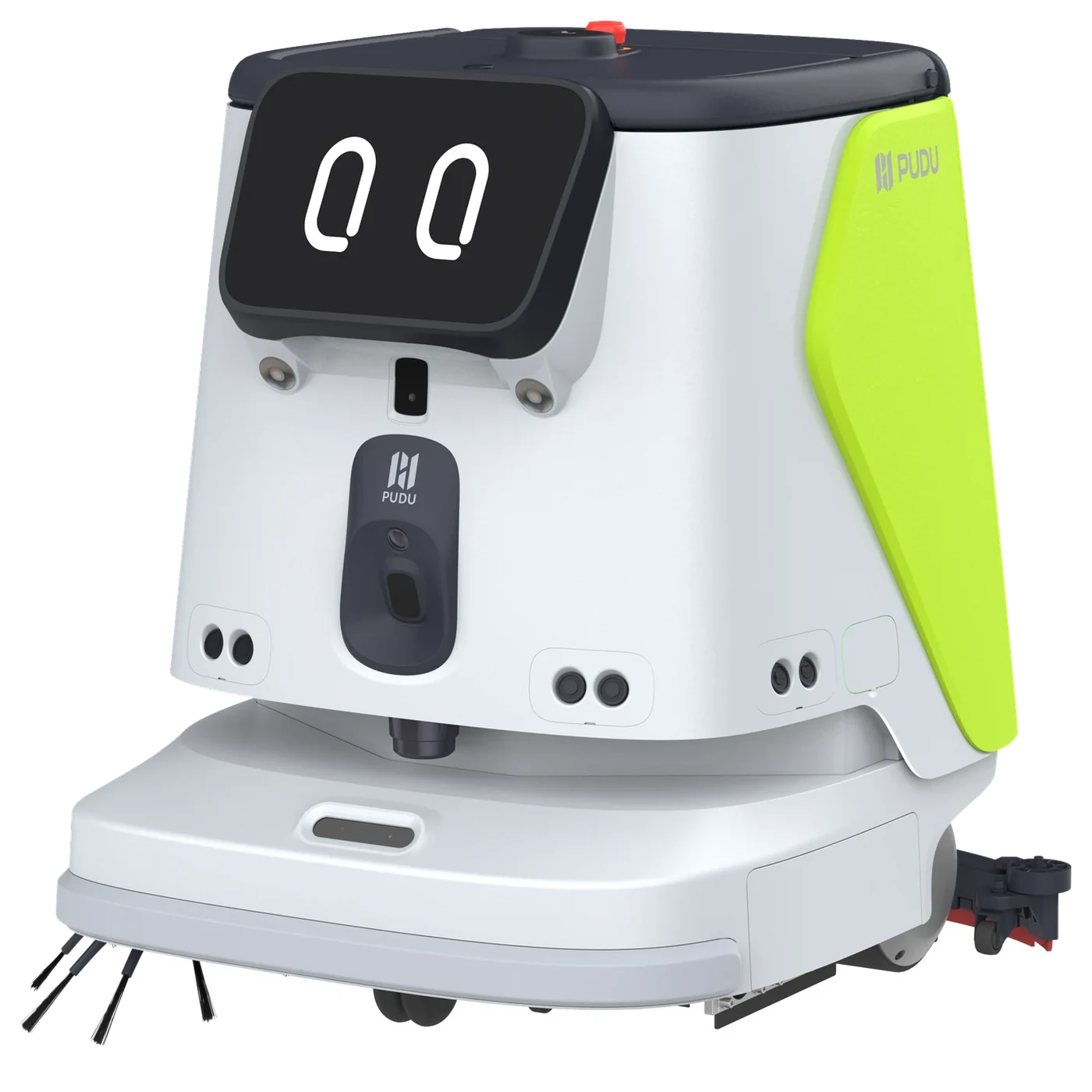
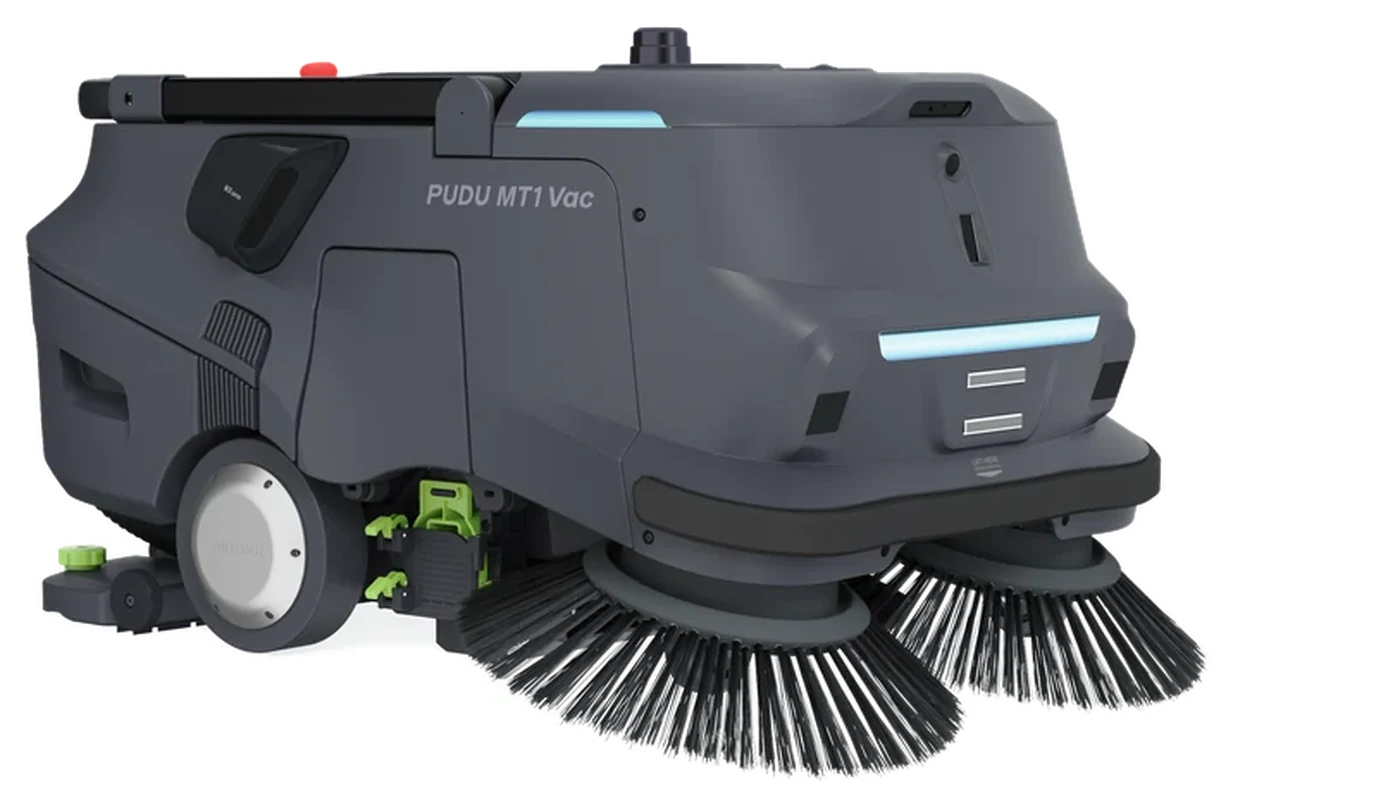
PUDU BG1 large scrubber-dryer robot, front three-quarter view
2,000m²/h
Coverage cleaning
6,000m²/h
Spot cleaning
75L
Clean water tank
7.5h
Runtime
Every angle

The BG1 from every side.

Front, three-quarter, side, rear and top-down, including the extendable edge brush.

PUDU BG1, front three-quarter view
What it does

Sweep and scrub, on the same lap of the floor.

On a warehouse or supermarket floor the usual sequence is sweep first, scrub second, because a scrubber run over loose debris turns dry rubbish into wet rubbish and smears it. That means two passes of the same floor, or two machines and two operators.

The PUDU BG1 collapses that into one. A front sweeping module collects dry debris such as dust, grit and paper, and a rear scrubbing module deep-cleans immediately behind it. Dry and wet cleaning happen simultaneously, on one lap, at up to 2,000 m²/h.

It is sized for the job: a 75 L clean water tank and 60 L recovery tank, plus roughly 7 L of detergent across dual agent tanks, with up to 7.5 hours of runtime. On a large floor plate the tank volume is what decides whether the machine finishes the area or stops halfway to refill.

Two details make it usable rather than just large. An extendable scrubbing brush reaches flush against walls and shelving, removing the untouched border strip that big scrubbers normally leave. And a stowable ride-on mode lets an operator take the seat for rapid relocation, fast initial mapping or stepping in when something needs a person.

Capabilities

What you get, at a glance.

Eight capabilities that decide whether a large machine is a help or a second problem.

Sweep and scrub together

A front sweeping module and a rear scrubbing module working on the same pass.

75 L clean water

Enough capacity to finish a large floor plate instead of stopping halfway to refill.

Extendable edge brush

Reaches flush to walls and shelving, so there is no untouched border to do by hand.

Stowable ride-on

An operator can take the seat for relocation, fast mapping or manual intervention.

Spot cleaning

Drives to detected mess at up to 6,000 m²/h instead of running a full coverage pass.

3D VSLAM + LiDAR

Holds position in high-ceiling, low-light and signal-poor spaces where SLAM usually struggles.

Automatic detergent

Dual agent tanks dose cleaning solution automatically rather than by hand.

85 cm turning radius

Tight enough to work supermarket aisle ends rather than needing an open floor to turn.

In detail

Big tanks, tight edges, one pass.

Three specifications that separate a large cleaning robot from a large cleaning machine.

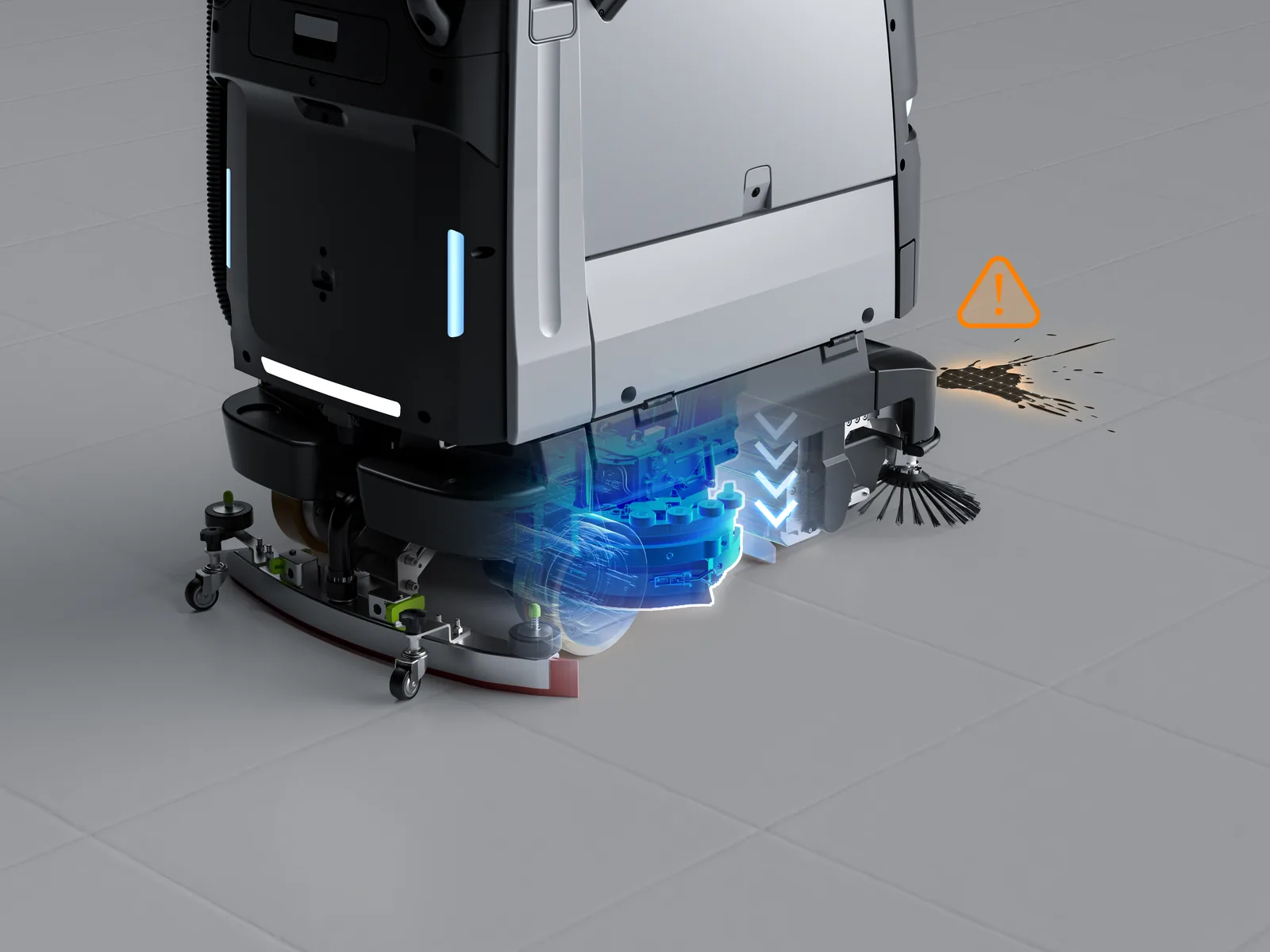
PUDU BG1 extending its scrubbing brush to clean flush against an edge
0mm gap

The border strip, finally done by the machine

Large scrubbers traditionally leave an untouched strip along every wall and shelf base, and that strip is exactly what a customer notices. The extendable scrubbing brush pushes out to clean flush against the edge, which removes the manual follow-up that quietly eats the labour saving.

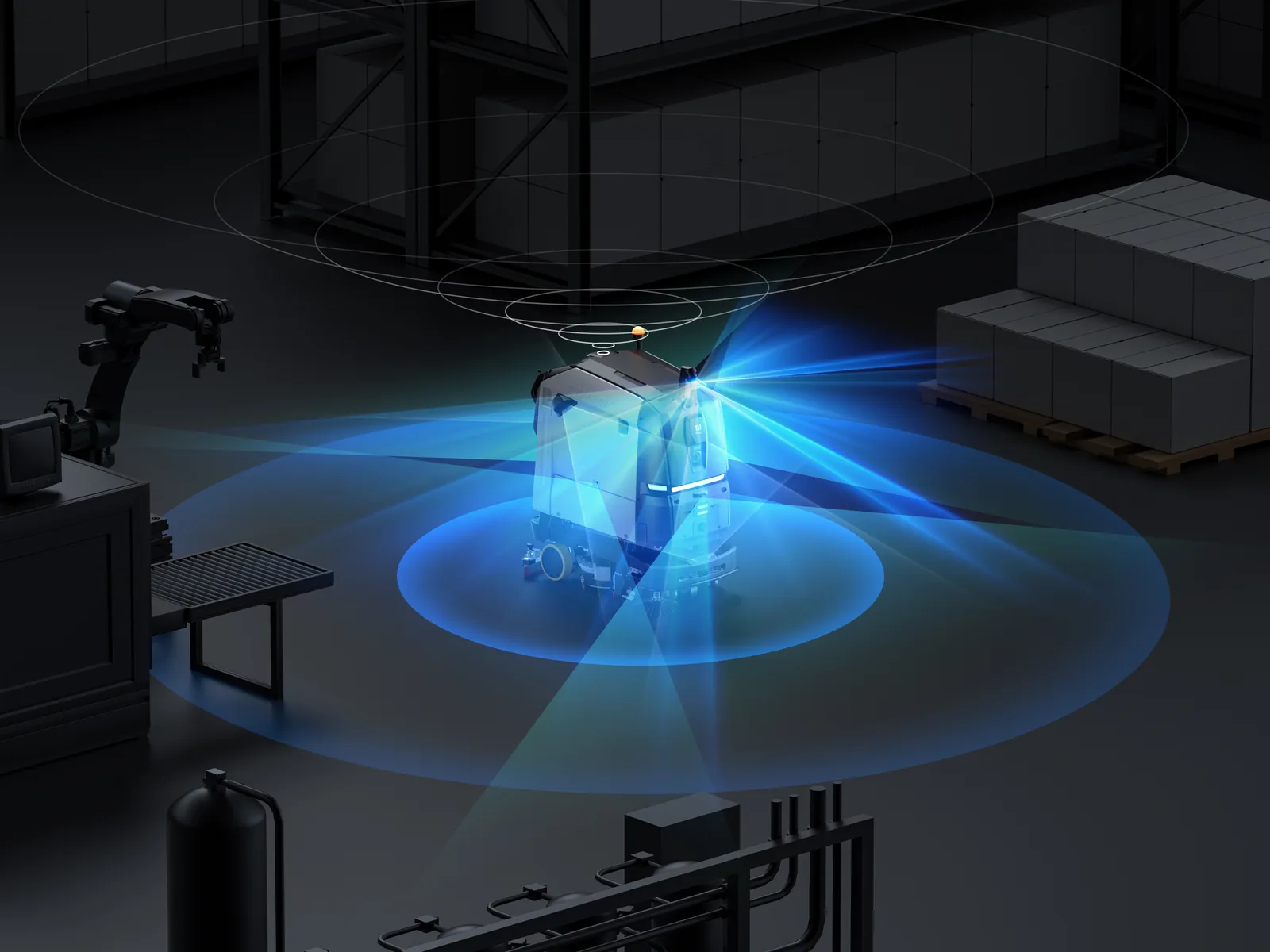
PUDU BG1 mapping a warehouse with 3D perception and LiDAR
3DVSLAM

Positioning that survives a real warehouse

High ceilings, low light and heavy signal interference are the three conditions that break conventional SLAM, and they describe most distribution centres. Fusing 3D VSLAM with LiDAR is what keeps the machine confident about where it is on a floor that looks identical in every direction.

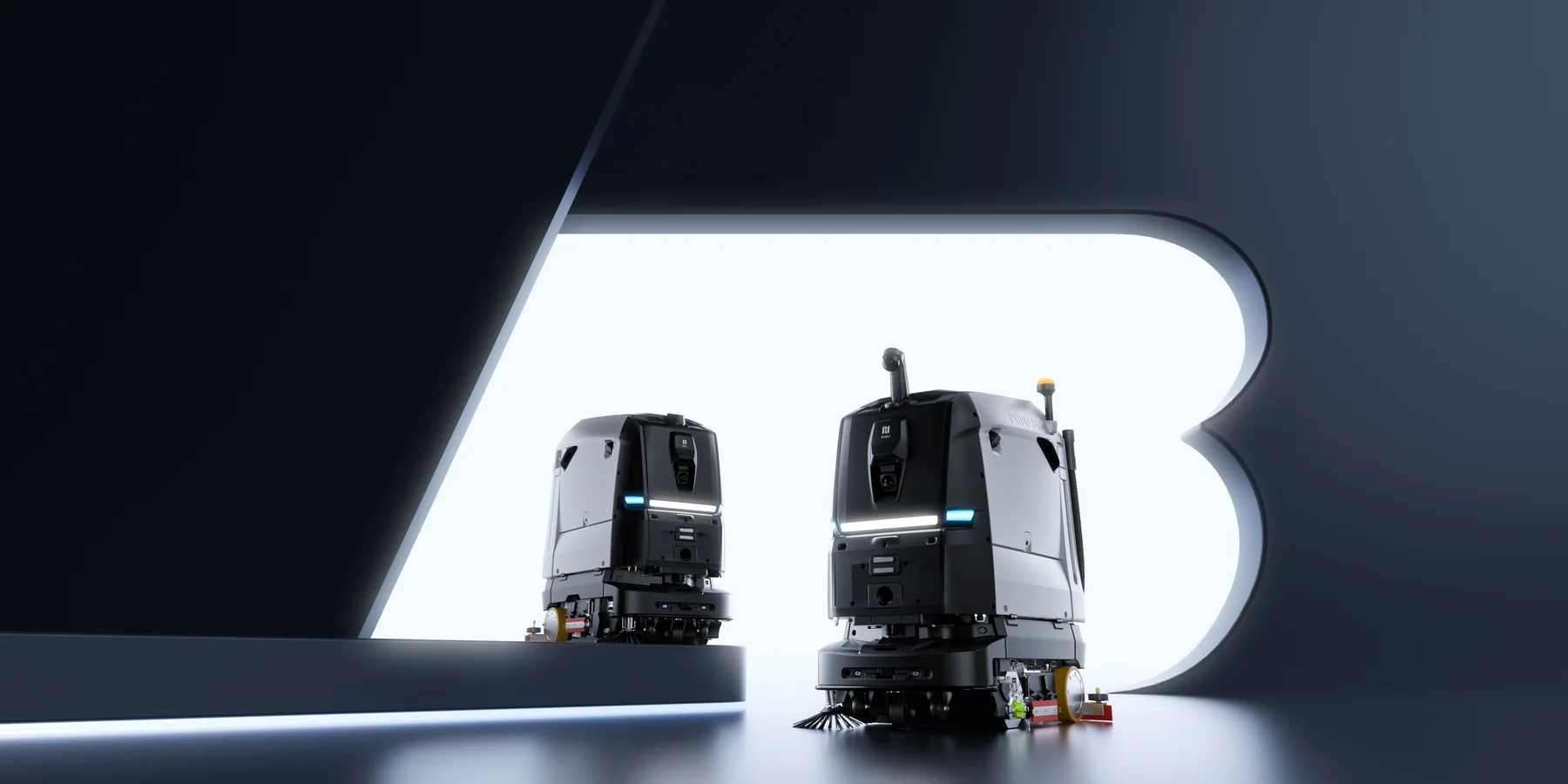
Two PUDU BG1 scrubber-dryer robots on a dark studio floor
75L

Enough water to finish the floor

Seventy-five litres of clean water and sixty of recovery, with roughly seven litres of detergent across dual tanks. On a large floor plate tank volume decides whether a machine completes the area in one run or spends the shift going back and forth to a tap.

Best for

Where the BG1 earns its keep.

Large hard-floor plates where dry debris and wet cleaning are both needed and the area is too big to do twice.

PUDU BG1 working a large warehouse floor with 3D perception mapping
In its element: a large distribution-centre floor swept and scrubbed on the same pass.

Warehouses & distribution

Large continuous floor plates where debris and grime both build up daily.

Supermarkets & big-box

Aisle runs and back-of-house where sweeping before scrubbing costs a second pass.

Manufacturing

Production floors with both dry residue and the kind of grime that needs water.

Airports & transit halls

Concourse-scale floors that need consistent presentation across long runs.

Covered carparks

Large sealed decks where a sweep-then-scrub sequence is otherwise two operations.

Arenas & large venues

Event floors that must be turned around quickly between bookings.

How it works

Map it once, then let it sweep and scrub together.

The ride-on mode makes initial mapping quick, and after that the machine runs the floor on a schedule.

Step 01

Survey

We check the floor plate, aisle widths, turning space, drainage and where the water station will sit.

Step 02

Ride to map

An operator uses the stowable seat to drive the first mapping run, which is far quicker than walking it.

Step 03

Run

Scheduled coverage sweeps and scrubs on one pass; spot cleaning handles mess between full runs.

Step 04

Refill & empty

Tanks and the debris hopper are serviced on the schedule the app flags, not every cycle.

Specifications

Every number, on the record.

Manufacturer figures for the BG1 series. Where BG1 and BG1 Pro differ we say which is which rather than quoting the better number for both.

Performance
Category
Large sweeper-scrubber robot
Cleaning functions
Front sweeping and rear scrubbing simultaneous, one pass
Coverage cleaning
Up to 2,000 m²/h
Spot cleaning
Up to 6,000 m²/h
Runtime
Up to 7.5 hours
Minimum turning radius
850 mm
Capacities
Clean water tank
75 L
Wastewater tank
60 L
Detergent
About 7 L across dual agent tanks, dosed automatically
Navigation & intelligence
Positioning
3D VSLAM fused with LiDAR
Designed for
High ceilings, low light and high signal interference
Edge cleaning
Extendable scrubbing brush, flush to walls and shelving
Manual mode
Stowable ride-on seat for relocation, mapping and intervention
Physical & variants
Dimensions
1195 × 760 × 1303 mm with squeegee
Dimensions, squeegee removed
1120 × 660 × 1303 mm
Maximum speed, BG1
1.0 m/s
Maximum speed, BG1 Pro
1.2 m/s
Suitability
Floor types
Large sealed hard floors: concrete, tile, polished stone, epoxy
Typical sites
Warehouse, supermarket, manufacturing, transit hall, arena
Australian deployment

One pass matters more the bigger the floor gets.

On a small floor, sweeping before scrubbing costs a few extra minutes. On a distribution-centre floor plate it costs a whole second pass, which is either double the machine hours or a second machine and a second operator. That arithmetic is why the BG1 exists.

Tank volume is the other large-floor constraint people underestimate. 75 L clean and 60 L recovery is what lets the machine finish a big area in one run rather than spending the shift walking back to a tap, and the automatic detergent dosing removes another manual step.

WA distribution centres and supermarkets are exactly the environment that breaks conventional navigation: high ceilings, repetitive racking that looks identical in every direction, low light in parts and plenty of signal interference. Fusing 3D VSLAM with LiDAR is what keeps positioning stable in that setting.

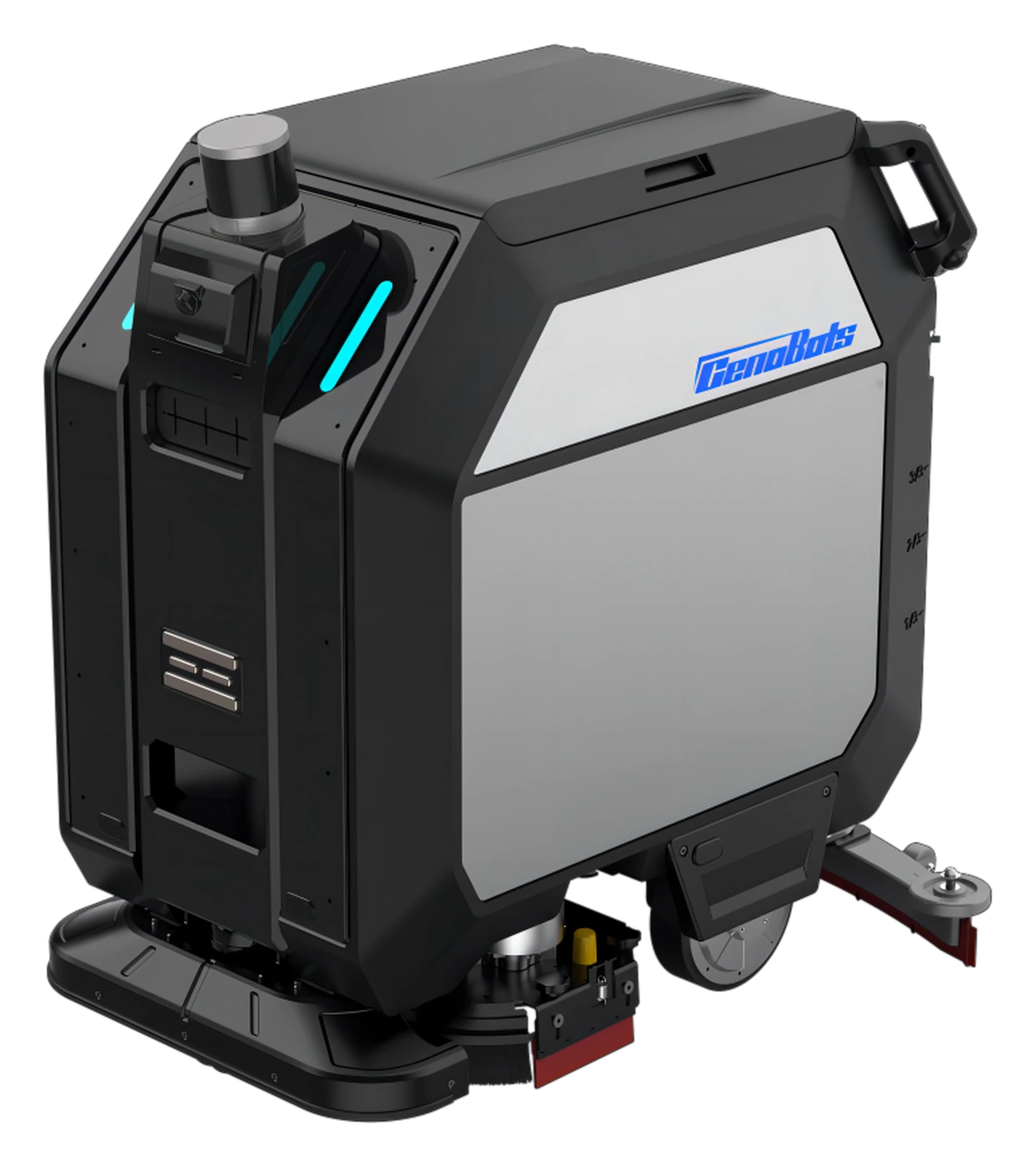
If your floor plate is smaller, the CC1 Pro or a CenoBots L50 will suit better and cost less to run. We are multi-OEM, and on a machine this size getting the sizing wrong is an expensive mistake, so we survey before anything is ordered.

Why Perth Robots

Honest credibility, not just claims.

Engineering-led.

Built by someone who has engineered advanced systems and operated them in demanding environments. We know what these machines can and can't do.

WA-based service, not a reseller.

We deploy and service every unit ourselves across WA. If a robot's down at 2am on a mine site, that's on us, in the same time zone.

Multi-OEM, honest advice.

We recommend the right robot for your site, not the only one we carry.

Low-risk by design.

RaaS is a flat monthly subscription, not a capital gamble. The risk sits with us, and you run the robot as often as you need.

FAQ

Common buyer questions.

What is the difference between the BG1 and the BG1 Pro?
They share the platform, the tanks and the cleaning modules. The published difference is top speed: the BG1 runs to 1.0 m/s and the BG1 Pro to 1.2 m/s. On a large open floor that difference compounds across a shift, which is the case for the Pro; on a congested floor it rarely matters. We will tell you which one your site actually justifies.
Does it really sweep and scrub at the same time?
Yes. A front sweeping module collects dry debris such as dust, grit and paper, and a rear scrubbing module deep-cleans immediately behind it on the same pass. That is the point of the machine: on a large floor, sweeping and scrubbing as two separate operations doubles the work.
Can someone drive it?
Yes, via a stowable ride-on seat. It is used for moving the machine quickly between areas, driving the first mapping run, and stepping in when something needs a person. It is not intended as the normal operating mode, but it is genuinely useful for commissioning and for turnaround work.
Will it clean right up to the walls and shelving?
That is what the extendable scrubbing brush is for. It pushes out so the brush works flush against walls and shelf bases, which removes the untouched border strip that large scrubbers normally leave for someone to finish by hand. On a long aisle run that strip is a real labour cost.
How big does our floor need to be to justify it?
Bigger than most. With 75 L of clean water, a 2,000 m²/h coverage rate and a machine 1195 mm long, the BG1 is built for warehouse, supermarket and concourse-scale floor plates. If your area is under a few thousand square metres, a smaller scrubber will almost certainly cost less and fit better, and we will say so.
Can it turn in a supermarket aisle?
The minimum turning radius is 850 mm, which suits aisle ends in most large-format retail. Whether it works in your aisles depends on your actual layout rather than the specification, so aisle widths and turning space are things we measure at survey.
Will the navigation cope with a high-ceiling warehouse?
That is specifically what it is built for. Fusing 3D VSLAM with LiDAR is designed to hold positioning in high-ceiling facilities, low-light areas and spaces with heavy signal interference, which is the combination that breaks simpler navigation in distribution centres.
How do we pay for it?
Three ways, your choice. Robot as a Service is a flat monthly subscription from $50 a day covering hardware, servicing, support and software. You can also buy outright with an optional Care Plan, or take a 2 to 4 year lease, with the option to own the unit at the end of the term.
Who services it in Western Australia?
We do. Perth Robots handles the survey, mapping, deployment, training and ongoing service ourselves from Perth. Metro sites get same-day on-site response; regional WA gets next business day for parts, with most software issues resolved remotely within the hour.
Take the next step

Size a large machine against a real floor.

Send us the floor area, the aisle layout and what the mess actually is. We'll come back inside one business day with an indicative quote, a BG1 or BG1 Pro recommendation, and a survey date.

Call us
Related

Smaller floor? Smaller robot.

The BG1 is the large-format unit. Below warehouse scale, one of these will fit better and cost less to run.