Compact Scrubber-Dryer · Small-format · PUDU Robotics New for 2026

ET1 compact cleaning robot for small commercial floors in Perth.

The PUDU ET1 is a compact scrubber-dryer built for the floors most cleaning robots are too big for. It scrubs, sweeps, vacuums and dust-mops in a single pass at up to 720 m²/h, fits down a 50 cm aisle, and empties, rinses and refills itself at an 8-in-1 dock. Supplied, mapped and serviced from Perth.

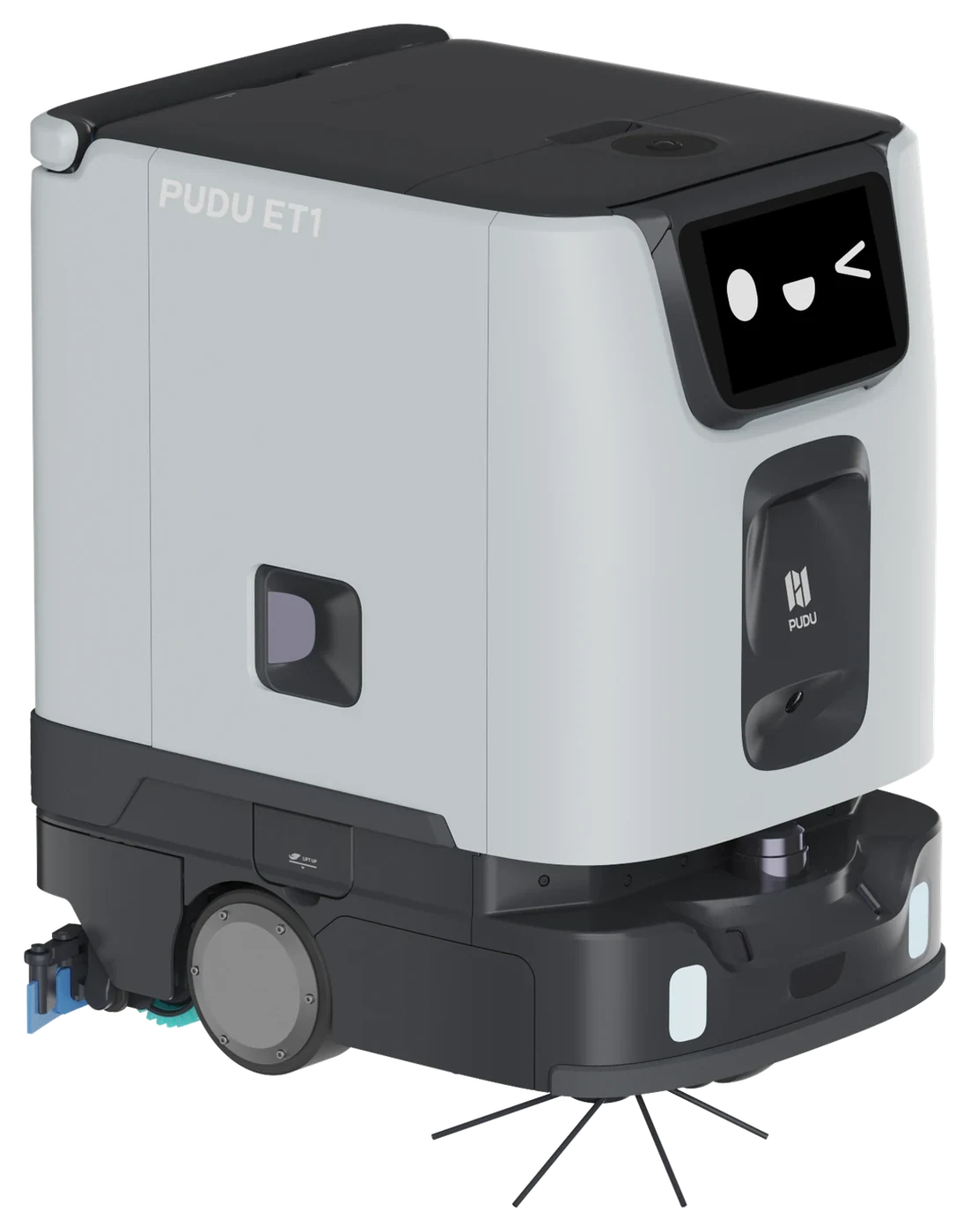
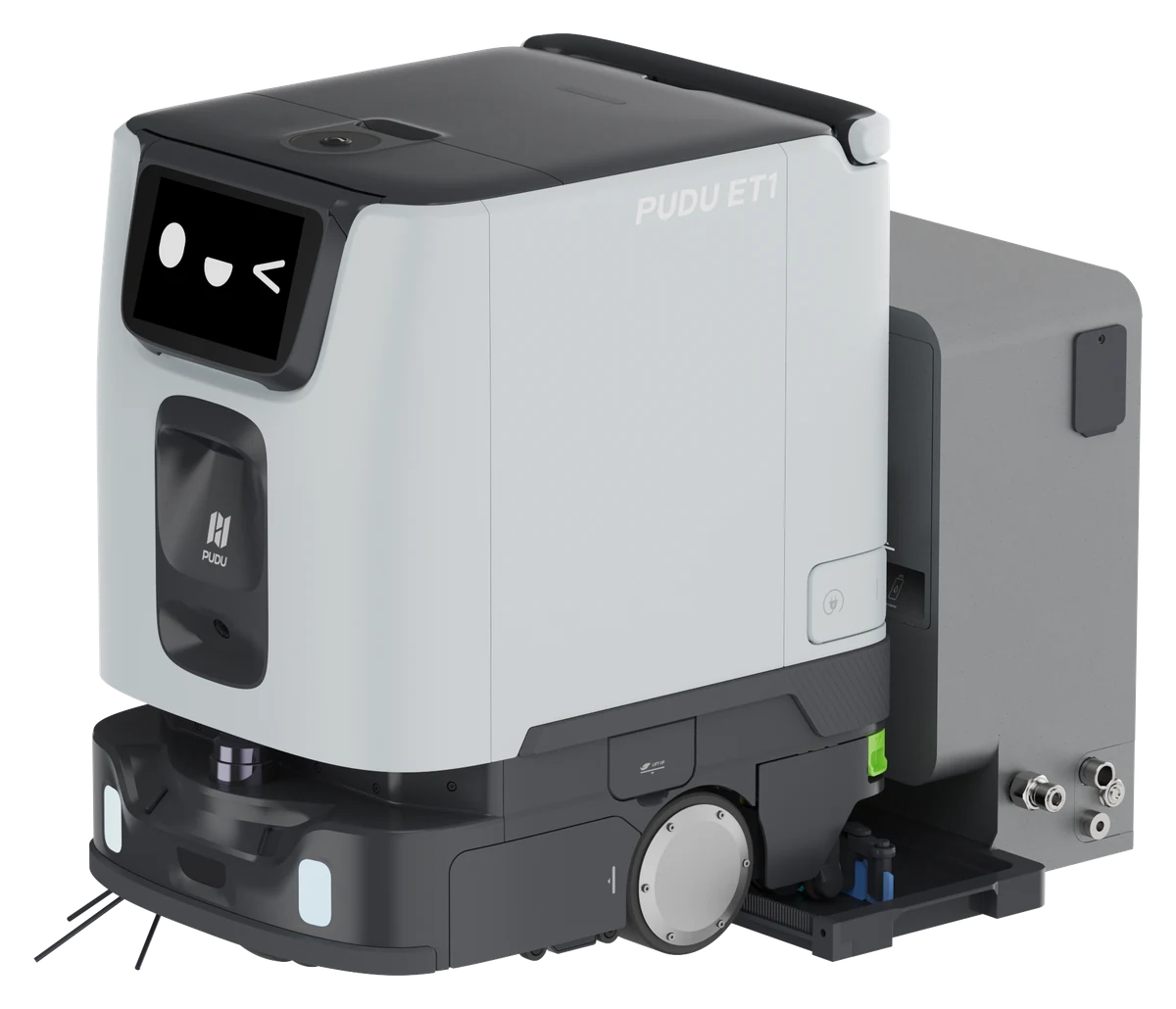
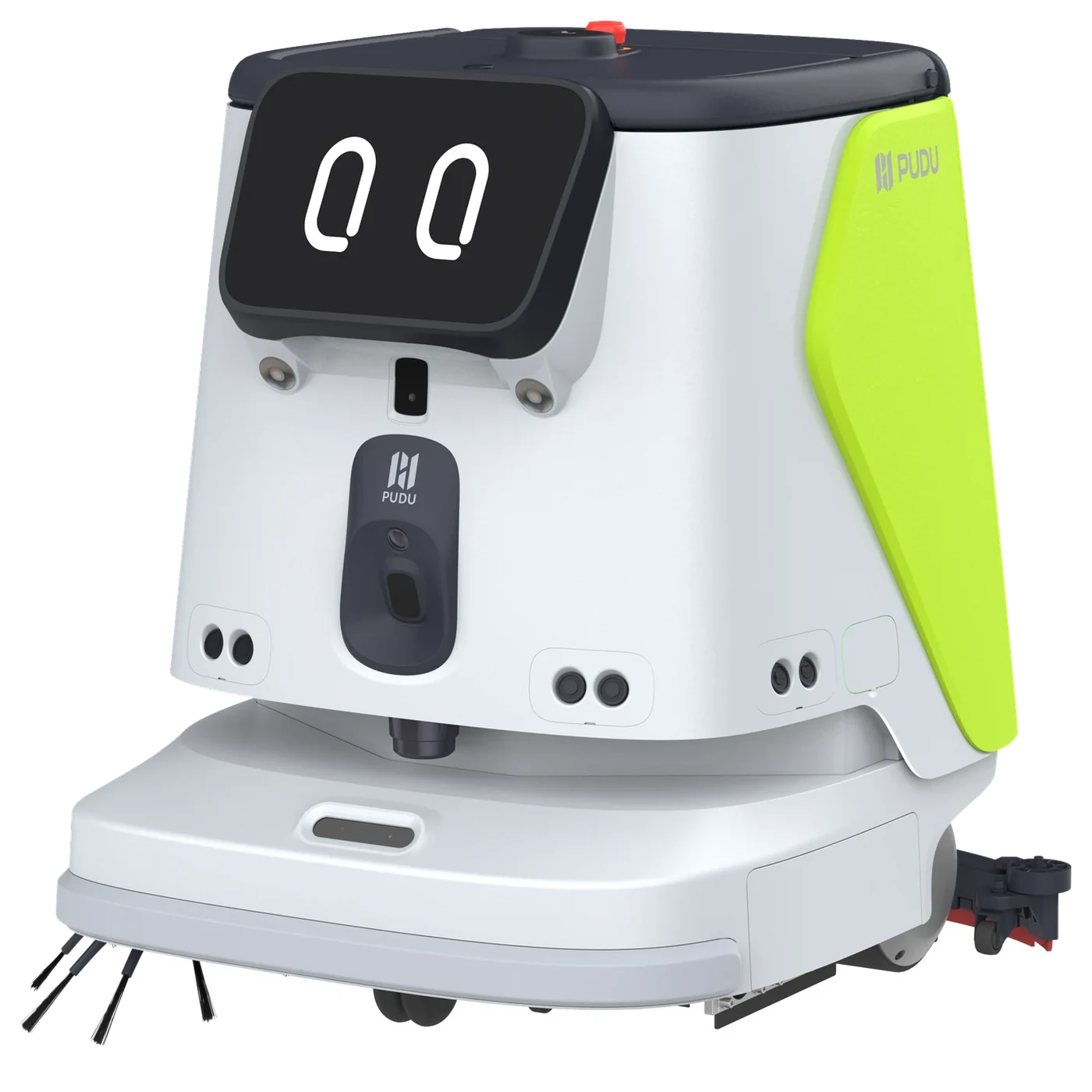
PUDU ET1 compact scrubber-dryer cleaning robot, front three-quarter view
720m²/h
Peak cleaning rate
50cm
Minimum aisle width
4-in-1
Jobs per pass
8-in-1
Self-cleaning dock
Every angle

The ET1 from every side.

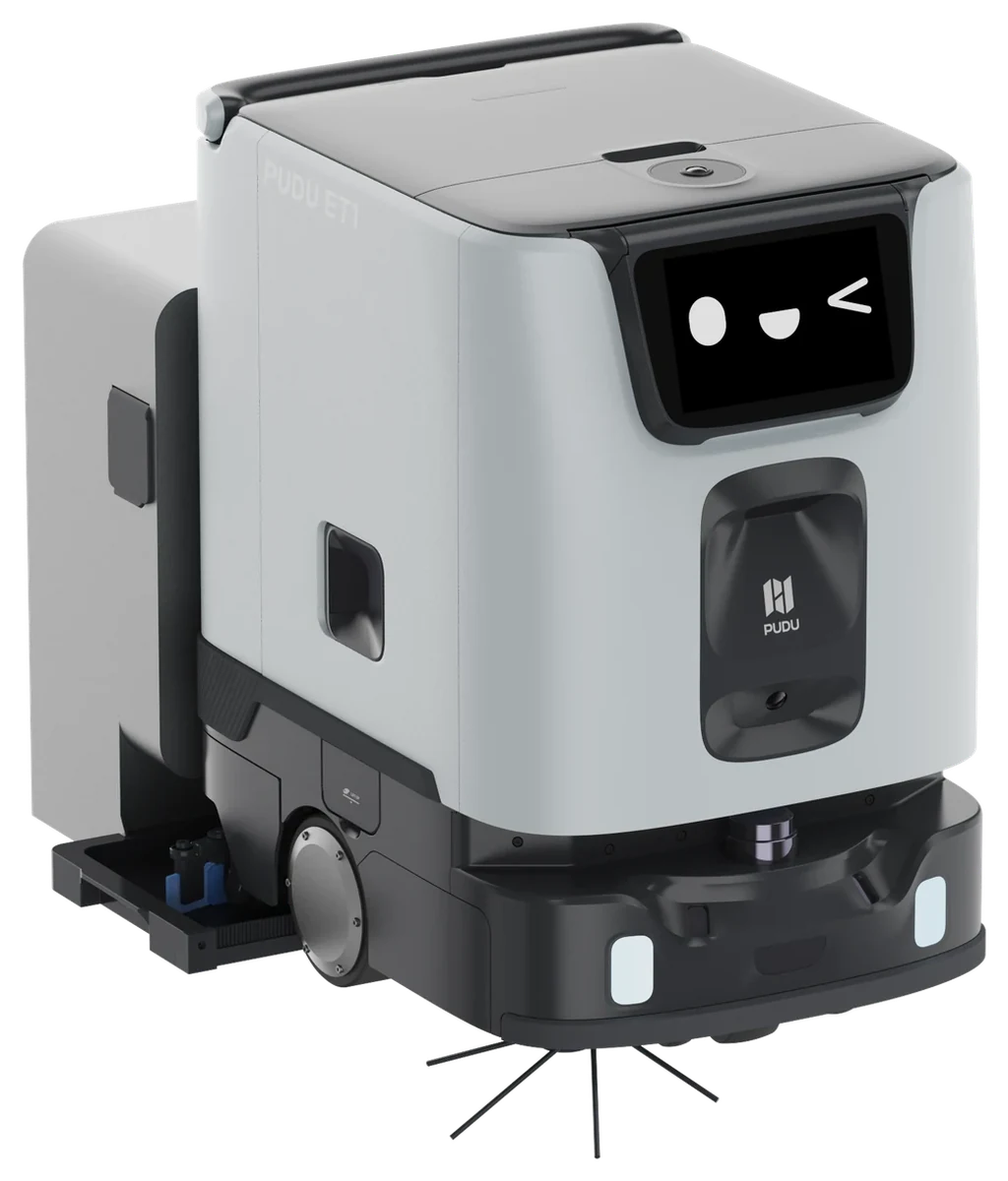
Front, three-quarter, side and rear, plus the optional advertising screen raised.

PUDU ET1, front three-quarter view showing the status display and side tank
What it does

The floors that were always too small to automate.

Commercial cleaning robots have mostly been built for big floor plates: warehouses, shopping centres, airports. If you run a convenience store, a pharmacy, a café or a single office floor, the machines were too wide for your aisles and too expensive for your floor area. The cleaning stayed manual because nothing else fitted.

The ET1 is built for exactly that gap. PUDU designed it for spaces between 100 and 800 m², with a body 380 mm wide that passes through a 50 cm gap. It goes down a convenience-store aisle, between café tables, and through a standard doorway without anyone lifting a door off its hinges.

It also does more per pass than most machines its size. A front-sweep, rear-scrub layout means it sweeps and vacuums dry debris at the front, then scrubs and squeegee-dries behind, in one lap of the floor. Dry rubbish goes into a 2.5 L dust box, dirty water into a separate 7.2 L tank. You are not running a sweeper and then a mop.

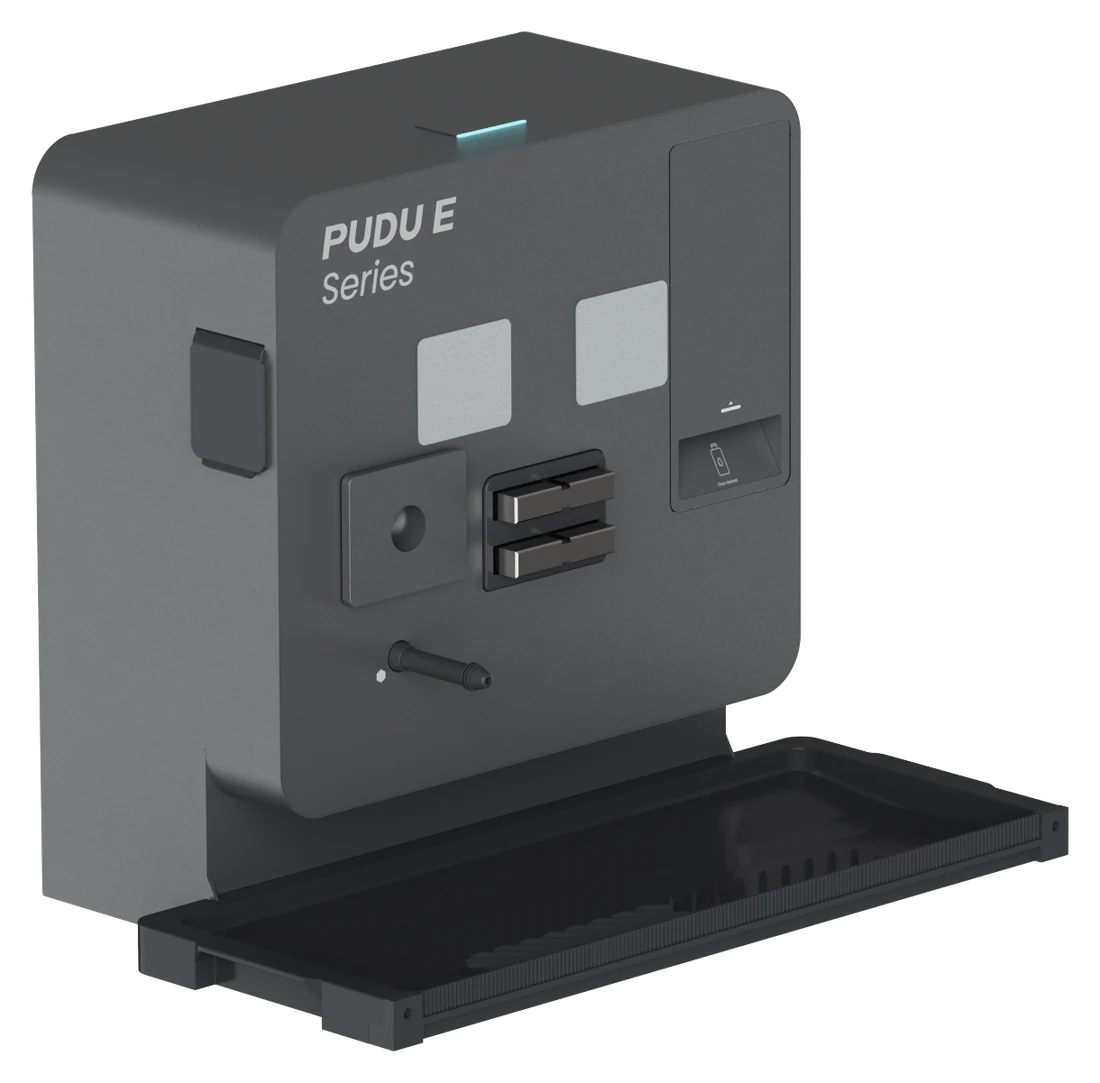
The part that matters most for a small team is what happens at the end. The ET1 returns to an 8-in-1 docking station that charges it, refills clean water, drains the dirty water, doses detergent, rinses the roller and squeegee, spin-dries the roller and heats the water for the next run. Nobody empties a bucket or washes a mop head at close.

Capabilities

What you get, at a glance.

Eight things the ET1 does that a mop and a manual sweeper do not.

4-in-1 cleaning

Scrubs, sweeps, vacuums and dust-mops in a single pass, front to back.

Roller self-cleaning

The roller mop rinses itself as it works, so dirt is lifted off the floor rather than pushed along it.

Dry behind it

The rear squeegee and 20 kPa suction leave the floor walkable straight away, with no streaking.

8-in-1 station

Charging, water in, water out, detergent, rinsing, spin-drying and heating, all automatic.

AI adaptive cleaning

Reads the floor surface and the dirt on it, then sets its own speed, roller speed and water flow.

Fits 50 cm aisles

Compact enough for shop aisles, café floors and office corridors that larger scrubbers cannot enter.

Auto mapping

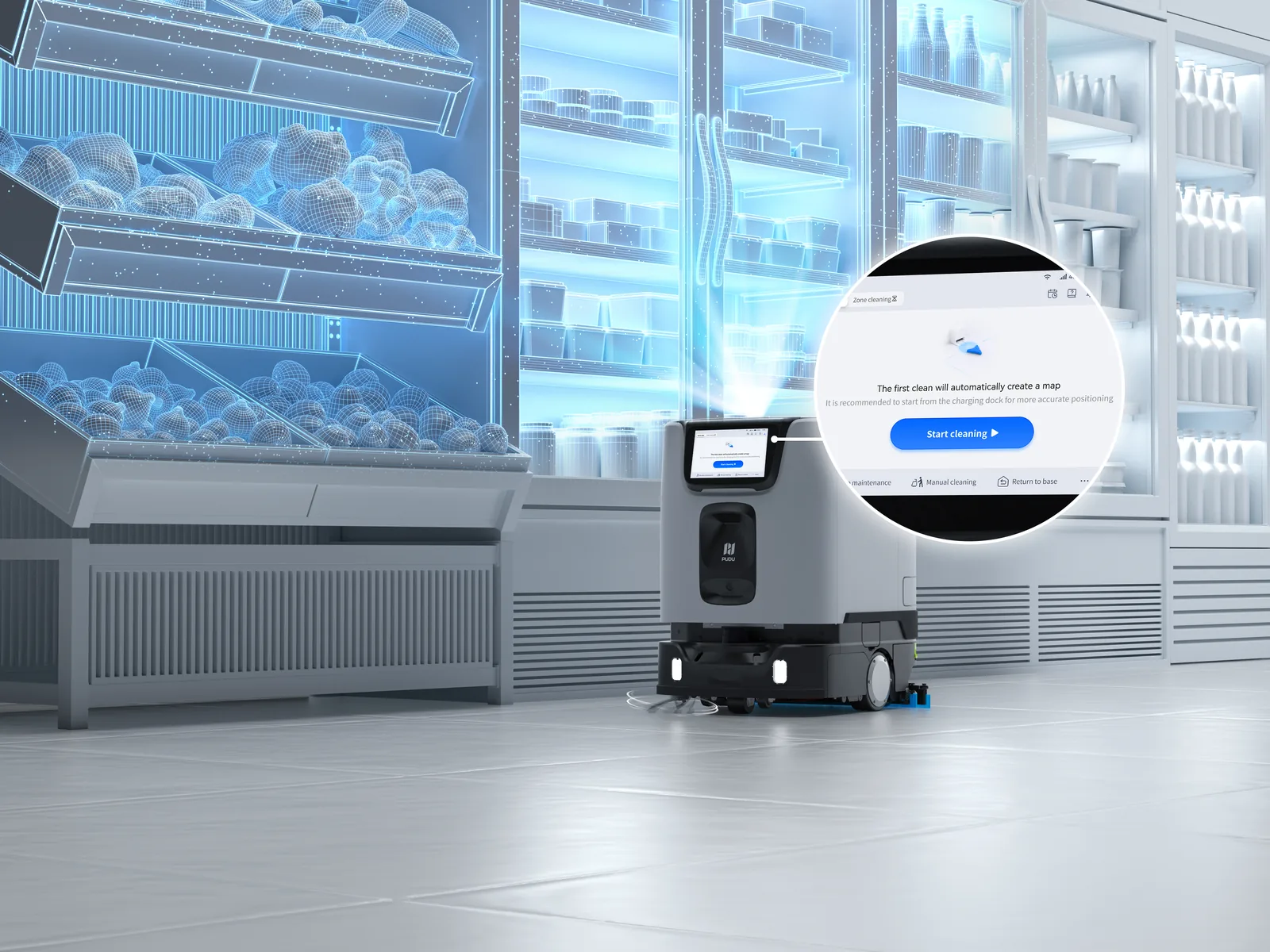
Maps the space itself on the first run, then starts on one press from the panel or the app.

Optional 21.5″ screen

An advertising display that runs promotions or wayfinding while the robot cleans.

Cleaning power

Small machine, commercial-grade numbers.

The specifications that decide whether a floor actually comes up clean.

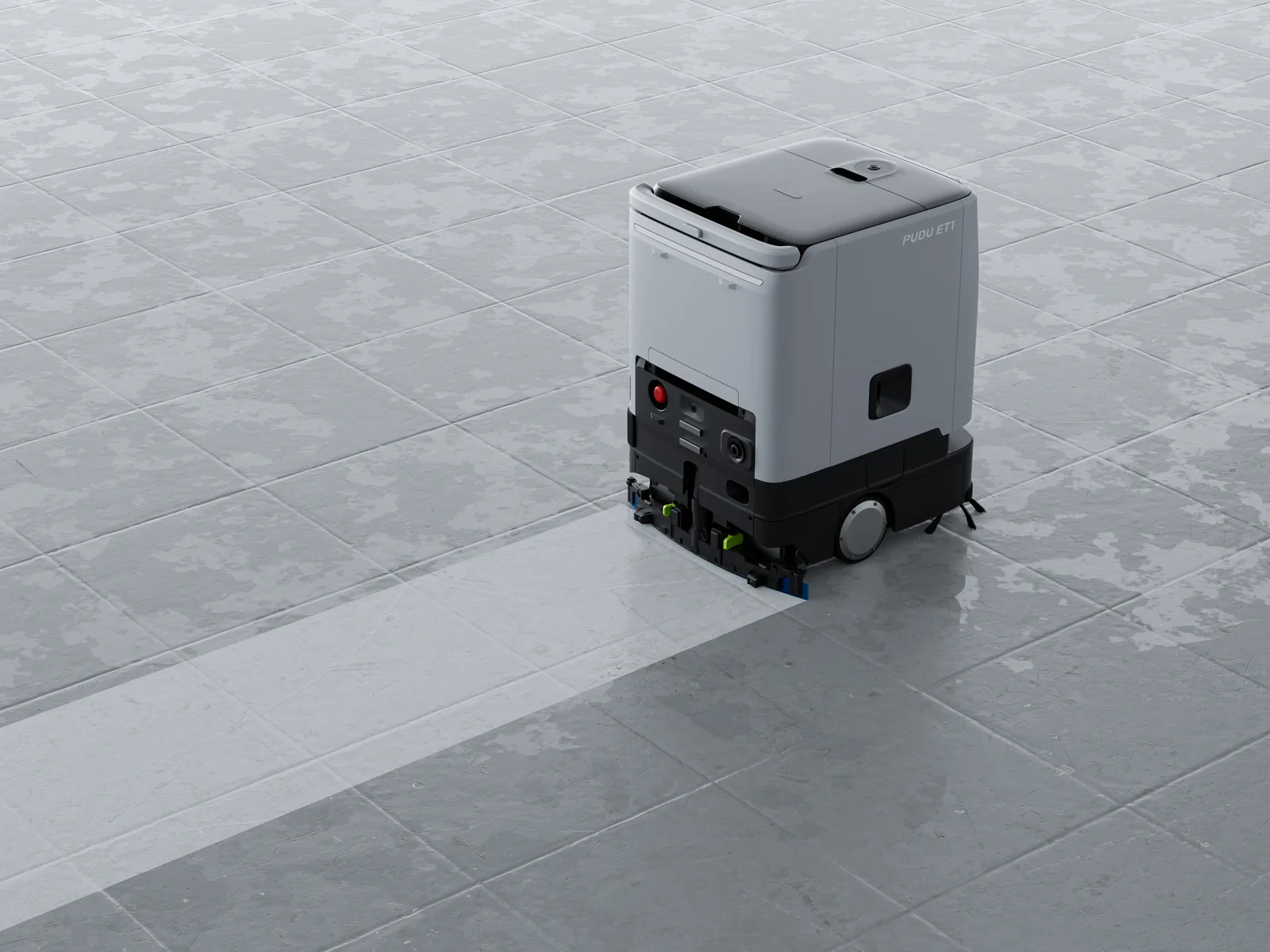
PUDU ET1 leaving a dry, streak-free stripe across a wet tiled floor
800rpm

A roller fast enough to lift ground-in dirt

The scrubbing roller turns at up to 800 rpm and rinses itself in real time, so it keeps cutting into the floor instead of loading up with grime after the first few metres. Behind it, the squeegee and 20 kPa of suction pull the water straight back off, which is why the floor is walkable immediately rather than roped off to dry.

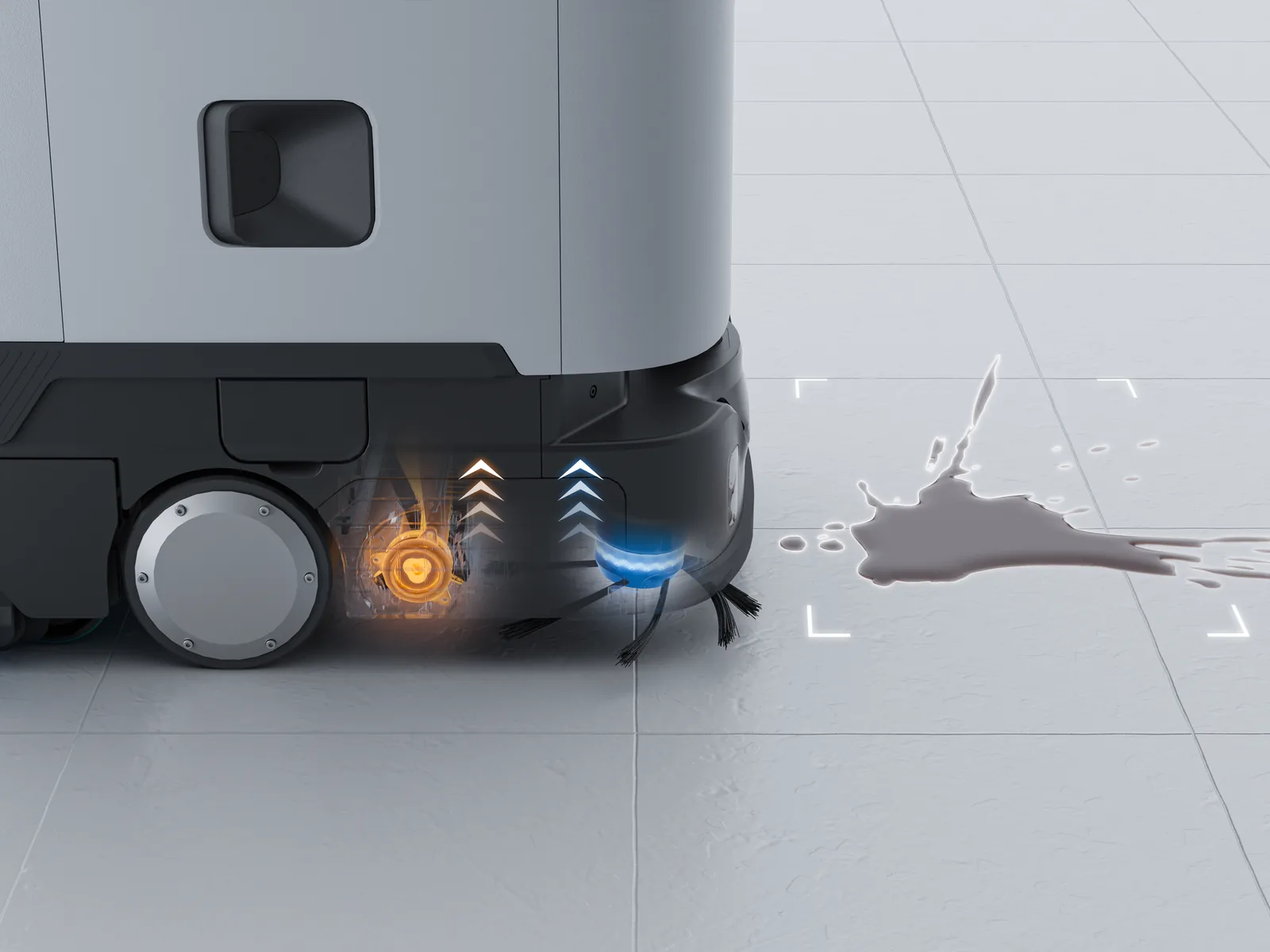
Close view of the PUDU ET1 cleaning head approaching a liquid spill, with hot water and suction indicated
85°C

Hot scrubbing for the marks cold water leaves behind

The station heats water to 85 °C for stubborn stains, which is the difference between a floor that looks mopped and a floor that looks cleaned. It matters most in food service, where the residue is grease and sugar rather than dust, and where cold water and a flat mop just move the film around.

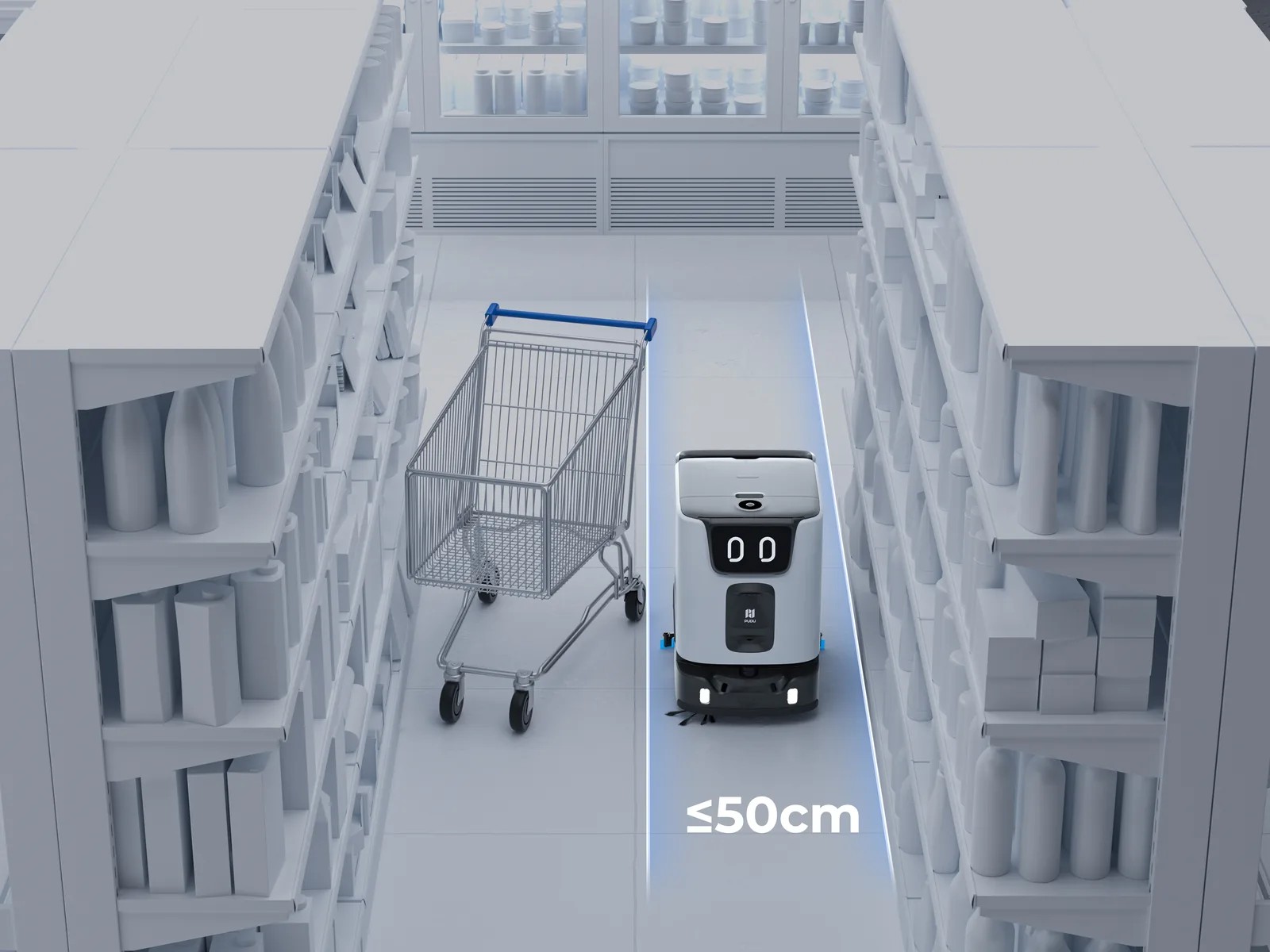
Top-down view of the PUDU ET1 cleaning a narrow supermarket aisle beside a shopping trolley, annotated 50 cm
50cm

Narrow enough for the floors you actually have

The ET1 needs 50 cm of width and 60 cm of height to get through. That is the specification that decides whether a robot is useful in a convenience store or a café, because a machine that cannot reach between the shelving leaves you doing the hard parts by hand anyway.

The docking station

Eight jobs your staff no longer do.

The ET1 returns to its station and resets itself for the next run. This is the part that decides whether a cleaning robot actually saves labour.

PUDU ET1 8-in-1 self-cleaning docking station
Charges the robot
Refills clean water
Drains wastewater
Doses detergent
Rinses the roller mop
Rinses the squeegee
Spin-dries the roller
Heats the water
PUDU ET1 alongside its 8-in-1 self-cleaning docking station
The robot and its station together. The station is the reason a 45 kg machine can run unattended in a store with no cleaning staff on site.
AI cleaning

It reads the floor, then changes what it does.

Most cleaning machines run one routine everywhere. The ET1 identifies the floor surface and the type of dirt on it, then sets its own driving speed, roller speed and water output to match. On a lightly used office floor that means less water and a faster pass; on a greasy kitchen approach it means the opposite.

Two behaviours are worth knowing about because they are the ones that catch people out with cheaper machines. At a carpet edge, the ET1 lifts the scrubbing roller so the carpet stays dry. Over a liquid spill, it lifts the sweeping brush and side brush instead, so it does not drag the spill across the floor before the scrubber gets to it.

It maps the space itself on the first run, so there is no long commissioning exercise, and the cleaning is reported back as a heatmap showing what was covered and when. For a multi-site operator that is the useful part: evidence that the floor was cleaned, on the nights you are not there.

Best for

Where the ET1 earns its keep.

Small-format floors with hard surfaces, long trading hours and no dedicated cleaning team on site.

PUDU ET1 cleaning the floor of a convenience store between chilled display cabinets
In its element: a convenience-store floor, cleaned between deliveries rather than after close.

Convenience & small grocery

Narrow aisles between chillers and shelving, where a full-size scrubber has never fitted and the floor gets mopped after close.

Pharmacies & clinics

Presentation floors that need to look clean during trade, with a documented record of when they were cleaned.

Cafés & quick service

Grease and sugar residue in front-of-house and kitchen approaches, where hot scrubbing does what a cold mop cannot.

Single office floors

Hard-floor lobbies, kitchenettes and corridors on one tenancy floor, cleaned overnight without a contractor visit.

Hotels & serviced apartments

Lobbies, lift lobbies and back-of-house circulation in budget and mid-market properties with small housekeeping teams.

Small campus buildings

Childcare rooms, training centres and community facilities where the floor is hard surface and the budget is not big-site scale.

How it works

From dock to dock, without your team in the loop.

One survey, one map, then a schedule. The only recurring manual job is emptying the dust box.

Step 01

Survey

We walk the floor, check aisle widths and surfaces, and confirm the ET1 is the right size for the space before anything is ordered.

Step 02

Map

The robot maps the space on its first run and we set cleaning zones, exclusions and a schedule that fits your trading hours.

Step 03

Run

It cleans on schedule, adapts to what it finds, and returns to the dock to charge, refill, drain and rinse itself for the next run.

Step 04

Empty

Someone tips out the 2.5 L dust box when the app flags it. In a typical store that is a weekly job, not a nightly one.

Specifications

Every number, on the record.

Manufacturer figures for the ET1. Runtime and charge times depend on floor type and settings, so we confirm those against your site at survey rather than quote a best case here.

Performance
Category
Compact scrubber-dryer (commercial)
Cleaning functions
Scrub, sweep, vacuum, dust-mop one pass
Cleaning rate
300–720 m²/h
Target floor area
100–800 m²
Scrubbing width
300 mm
Sweeping width
390 mm
Min. passable width
500 mm
Cleaning system
Layout
Front-sweep, rear-scrub
Roller speed
Up to 800 rpm
Suction
20 kPa
Hot scrubbing
Up to 85 °C
Roller self-cleaning
Real time, while cleaning
Capacities & physical
Clean water tank
8 L
Wastewater tank
7.2 L
Dust box
2.5 L
Dimensions
500 × 380 × 580 mm
Weight
45 kg
Min. passable height
600 mm
Autonomy & options
Mapping
Automatic, on first run
AI behaviours
Surface and stain recognition, adaptive scrubbing, carpet-edge roller lift, spill brush lift
Reporting
Cleaning heatmaps via the PUDU app
Docking station
8-in-1 self-cleaning station
Optional display
21.5-inch advertising screen
Suitability
Best floor type
Sealed hard floors: tile, vinyl, sealed concrete, polished stone
Carpet
Detected and avoided for scrubbing; sweeps and vacuums only
Typical sites
Convenience retail, pharmacy, café and QSR, office floor, hotel, clinic
Australian deployment

The unit that finally makes small sites worth automating.

Most WA businesses that clean a hard floor are not warehouses. They are convenience stores, pharmacies, cafés, single office floors and small clinics, and until now the automation conversation skipped them entirely because the machines started too big. The ET1 changes the arithmetic: a floor of 100 to 800 m² is now a size a robot is actually designed for.

The labour case is different at this scale too. A small site is not replacing a cleaning crew, it is usually recovering the half-hour a shift that a staff member spends mopping after close, every day, at penalty rates. That is the number worth checking against a $50 a day subscription, and it is the calculation we will run with you honestly, including when it does not stack up.

PUDU is not a small manufacturer. According to Frost & Sullivan's 2025 report, PUDU Robotics ranks first globally in commercial cleaning robotics revenue with a 29% share, and the company reports more than 130,000 robots shipped across 85 countries. The ET1 is new, launched on 12 August 2026, but the platform behind it is not.

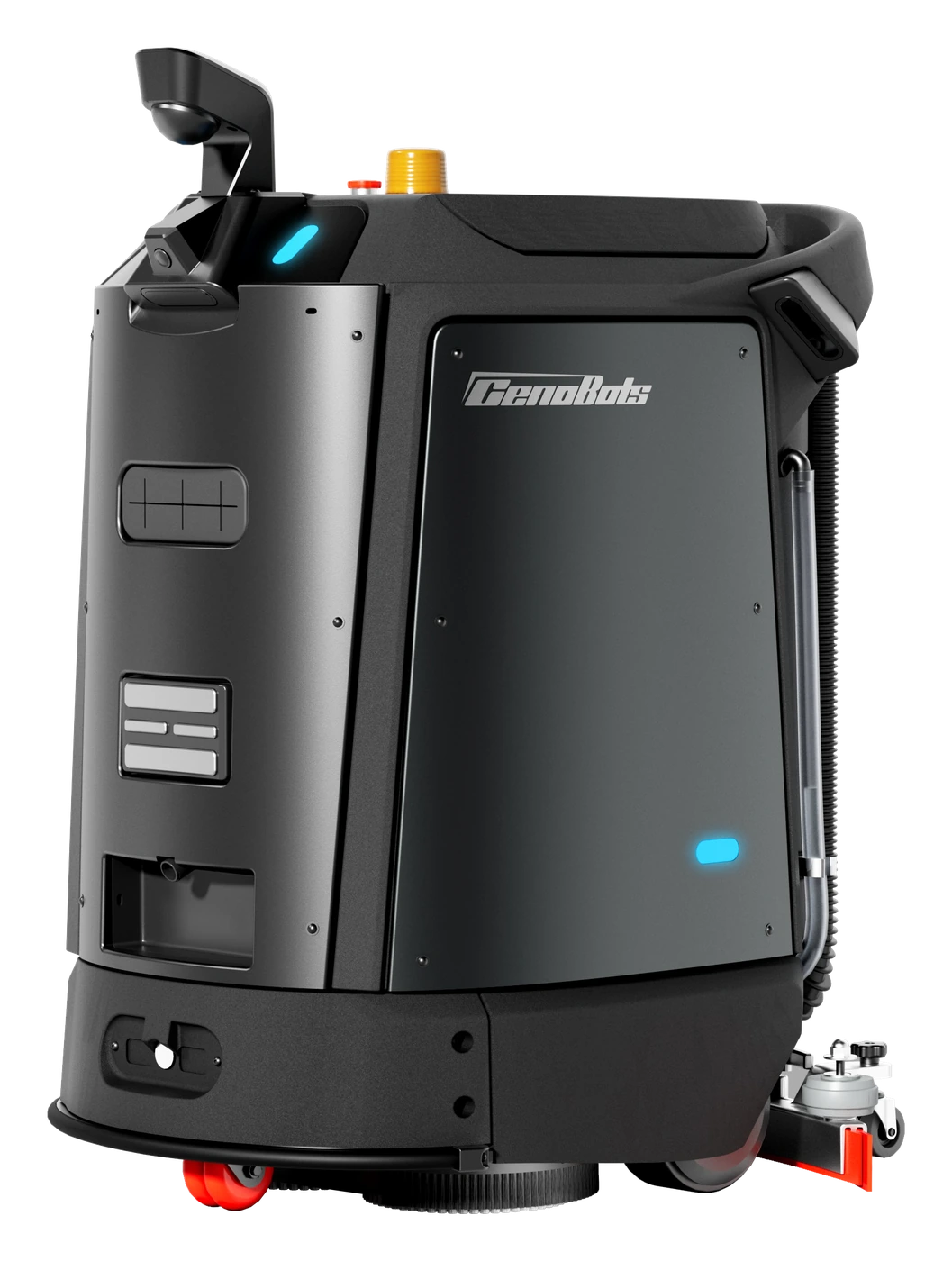
What we add is local. We are Perth-based, we survey your floor before anything is ordered, and we will tell you if the ET1 is the wrong size for your site. For bigger floor plates we would put you on a CenoBots L4 or L50 instead. Same partnership, same dashboard, right machine.

Why Perth Robots

Honest credibility, not just claims.

Engineering-led.

Built by someone who has engineered advanced systems and operated them in demanding environments. We know what these machines can and can't do.

WA-based service, not a reseller.

We deploy and service every unit ourselves across WA. If a robot's down at 2am on a mine site, that's on us, in the same time zone.

Multi-OEM, honest advice.

We recommend the right robot for your site, not the only one we carry.

Low-risk by design.

RaaS is a flat monthly subscription, not a capital gamble. The risk sits with us, and you run the robot as often as you need.

FAQ

Common buyer questions.

What size floor is the PUDU ET1 built for?
Spaces between roughly 100 and 800 m². That covers most convenience stores, pharmacies, cafés and quick-service restaurants, small office floors, clinics and budget hotel back-of-house. Above about 800 m² a larger scrubber-dryer will finish the floor in fewer cycles, and we will say so at survey rather than sell you the wrong unit.
Will the ET1 fit down my aisles?
The ET1 needs 50 cm of width and 60 cm of height to pass. The machine itself is 500 mm long, 380 mm wide and 580 mm tall. That is narrow enough for standard convenience-store aisles, between café tables, and through a normal doorway without taking the door off.
Does it really scrub, sweep and vacuum at the same time?
Yes. The ET1 uses a front-sweep, rear-scrub layout, so in a single pass it sweeps and vacuums dry debris at the front, then scrubs and squeegee-dries behind. That is four jobs in one pass: scrubbing, sweeping, vacuuming and dust-mopping. Dry debris goes to a 2.5 L dust box, dirty water to a 7.2 L tank.
What does the 8-in-1 docking station do?
It charges the robot, refills clean water, drains wastewater, doses detergent, rinses the roller mop, rinses the squeegee, spin-dries the roller and heats the water. The point is that nobody on your team has to fill a tank, tip out dirty water or wash a mop head at the end of a shift.
What happens when it reaches carpet or a spill?
It changes what it does. At a carpet edge the ET1 lifts the scrubbing roller so the carpet stays dry. Over a liquid spill it lifts the sweeping brush and side brush instead, so it does not smear the mess across the floor before the scrubber reaches it. It reads the floor and adjusts, rather than running one fixed routine everywhere.
Is the ET1 available in Australia yet?
PUDU launched the ET1 on 12 August 2026 and Perth Robots has units on order. We are taking site briefs now and booking surveys for the first WA deployments. If you want to be in the first group, the useful thing to send is your floor area, surface type and trading hours.
How do we pay for it?
Three ways, your choice. Robot as a Service is a flat monthly subscription from $50 a day that covers the hardware, servicing, support and software. You can also buy the unit outright with an optional Care Plan, or take a 2 to 4 year lease, with the option to own it at the end of the term.
What is the 21.5-inch screen for?
It is an optional advertising display that mounts on the robot. In retail and hospitality it lets the machine carry promotions or wayfinding while it cleans, which turns a cost line into something that also earns. It is genuinely optional and most back-of-house deployments skip it.
Who services it in Western Australia?
We do. Perth Robots is Perth-based, and we handle the survey, mapping, deployment, training and ongoing service ourselves. Perth metro gets same-day on-site response; regional WA gets next business day for parts, with most software issues resolved remotely within the hour.
Take the next step

Be one of the first ET1 sites in WA.

Send us your floor area, surface type and trading hours. We'll come back inside one business day with an indicative quote and a survey date, and we'll tell you if a different unit suits your site better.

Call us
Related

Bigger floor? Different robot.

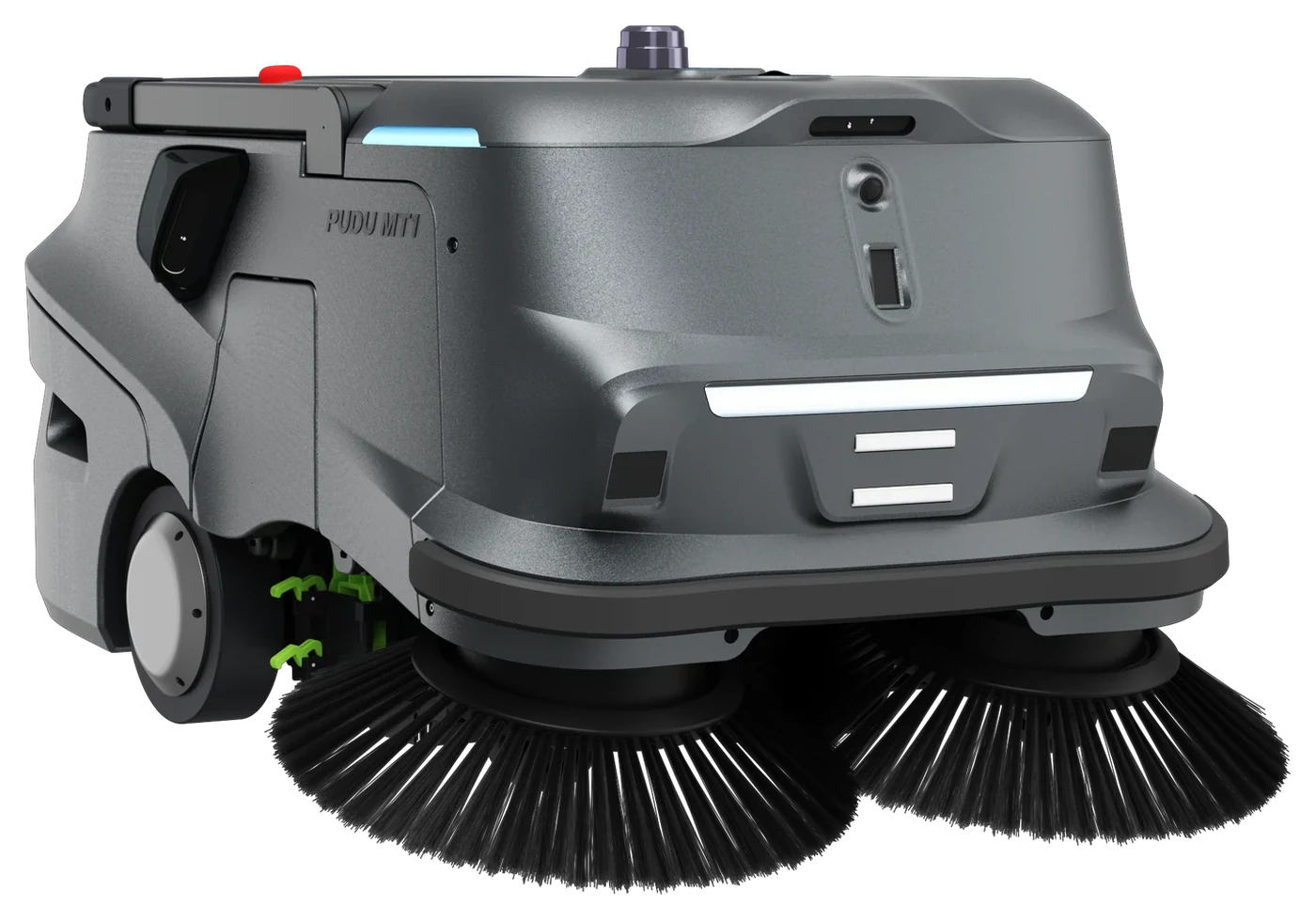
The ET1 is the small-format unit. If your floor is larger, or the mess is dry debris rather than spills, one of these fits better.